Chapter 8
organism: creature, animal, all living things.
Organisms vary in size—from the microscopic bacteria in mud puddles to gigantic oak trees—and are found just about everywhere. They have different behaviors and food requirements. In spite of these differences, all organisms have similar traits. These traits determine what it means to be alive.
Cell is the smallest unit of an organism that carries on the functions of life.
Hereditary material is present in all cells is DNA. It is passed from one generation to another through genes.
All of the changes that take place during the life of an organism are called development.
The length of time an organism is expected to live is its life span.
Living things must interact with their surroundings. Anything that causes some change in an
organism is a stimulus (plural, stimuli). The reaction to a stimulus is a response.
The regulation of an organism’s internal, life-maintaining condition despite changes in its environment is called homeostasis. The prefix (homeo- ), a combining form meaning one, or together. And the suffix (-stasis) refers to having a state of balance, stability or equilibrium. It also refers to a slowing or stoppage of motion or activity.
All living things need a place to live, water, and food source to survive.
Living things are made up of substances such as proteins, fats, and carbohydrates. Animals take in these substances as part of the foods that they eat. Plants and some bacteria make their own food.
Carolus Linnaeus, a Swedish naturalist, developed a new system of grouping organisms that was accepted and used by most scientists. His classification system was based on looking for organisms with similar structures.
The two-word naming system that Linnaeus used to name organisms is known as binomial nomenclature (bi NOH mee ul • NOH mun klay chur). Latin is the language used for binomial nomenclature. A two-word or scientific name identifies a species. The Eastern tiger salamander, belongs to the species Ambystoma tigrinum. Organisms of the same species can mate and produce fertile offspring.
binomial nomenclature: the system of nomenclature in which two terms are used to denote a species of living organism, the first one indicating the genus (a group of similar species) and the second the specific epithet (characteristic).
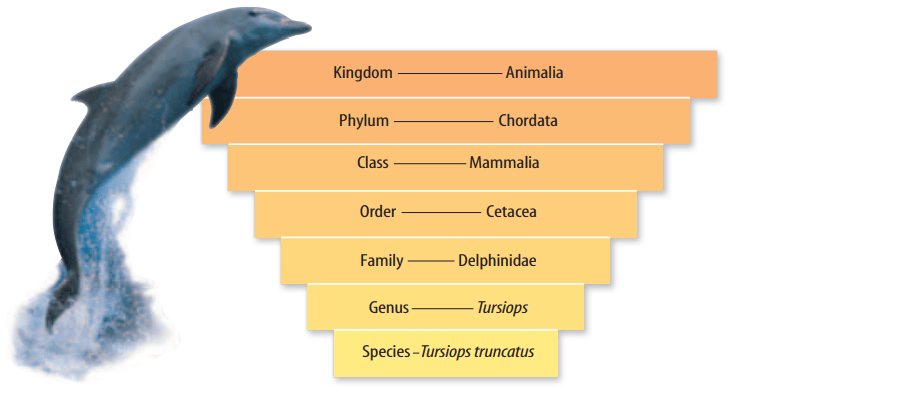
Scientific names are used for four reasons. First, they help avoid mistakes. Often, common names for two different organisms are the same, or one organism has many different common names. Scientific names help distinguish among those organisms. Second, organisms with similar evolutionary histories are classified together. Because of this, you know that organisms in the same genus are related. Third, scientific names give descriptive information about the species, like the salamander mentioned earlier. Fourth, scientific names allow information about organisms to be organized easily and efficiently. Such information may be found in a book or a pamphlet that lists related organisms and gives their scientific names.
Phylogeny (fi LAH juh nee) is the evolutionary history of an organism, that is, how the organism has changed over time.
In the classification system used today, the smallest group is a species. There are broader groups preceding species, the largest of which is a kingdom. Some scientists have proposed that before organisms are grouped into kingdoms, they should be placed in larger groups called domains. One proposed system groups all organisms into three domains.
A dichotomous (dividing into two parts) key is a detailed list of identifying characteristics that includes scientific names.
optometrist: eye doctor.
cork: a kind of tree, or wood which used for making wine corks.
To Hooke, the cork seemed to be made up of empty little boxes, which he named cells.
Rudolf Virchow hypothesized that cells divide to form new cells. Virchow proposed that every cell came from a cell that already existed. His observations and conclusions and those of others are summarized in the cell theory:
All organisms are made up of one or more cells. An organism can be one cell or many cells like most plants and animals.
The cell is the basic unit of organization in organisms. Even in complex organisms, the cell is the basic unit of structure and function.
All cells come from cells. Most cells can divide to form two new, identical cells.
brightfield microscope
fluorescent (suffix -escent process): is the emission of light by a substance that has absorbed light or other electromagnetic radiation.
stain: dyeing
Cells without membrane-bound structures are called prokaryotic (proh kayr ee AH tihk) cells. Cells with membrane-bound structures are called eukaryotic (yew kayr ee AH tihk) cells. Each cell performs specific functions; however, all cells must constantly take in nutrients, store, produce, and breakdown substances, and take in and use energy.
membrane-bound: Scientists have found that cells can be separated into two groups. One group has membrane-bound structures inside the cell and the other group does not.
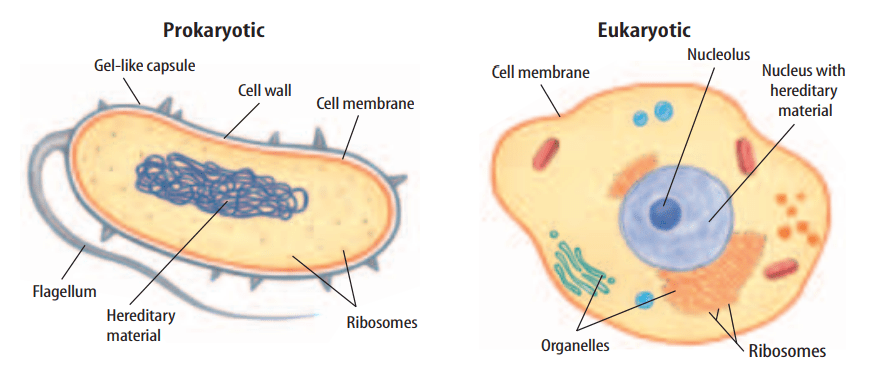
Cell walls are tough, rigid outer coverings that protect cells and give them shape.
Cellulose is an insoluble substance which is the main constituent of plant cell walls and of vegetable fibers such as cotton. It is a polysaccharide consisting of chains of glucose monomers. The long, threadlike fibers of cellulose form a thick mesh that allows water and dissolved materials to pass through.
Plant cell walls also can contain pectin and lignin. Pectin is a gluelike substance that makes jams and jellies have a thick texture. Lignin is a compound that makes cell walls rigid.
The cell membrane is the outermost covering of a cell unless a cell wall is present. It regulates interactions between the cell and its environment. The cell membrane allows nutrients to move into the cell, while waste products leave.
Cells are filled with a gelatinlike (porridgelike) substance called cytoplasm (SI toh pla zuhm) that constantly flows inside the cell membrane. Most of a cell’s life processes occur in the cytoplasm. In prokaryotic cells, the hereditary material is found here. Throughout the cytoplasm is a framework called the cytoskeleton, shown in Figure 10, which helps the cell maintain or change its shape and enables some cells to move. The cytoskeleton is made up of thin, hollow tubes of protein and thin, solid protein fibers. Proteins are organic molecules made up of amino acids.
Proteins are part of cell membranes and are needed for chemical reactions that take place in the cytoplasm. Cells make their own proteins on small structures called ribosomes. All ribosomes in prokaryotic cells, and some in eukaryotic cells, float freely in the cytoplasm. Ribosomes receive directions from the hereditary material on how, when, and in what order to make specific proteins.
Within the cytoplasm of eukaryotic cells are structures called organelles, the largest of which is usually the nucleus. Some organelles process energy and others manufacture substances needed by the cell or other cells. Certain organelles move materials, while others act as storage sites. Most organelles are surrounded by a membrane one or more layers of linked molecules. Ribosomes are considered organelles, but are not membrane-bound.
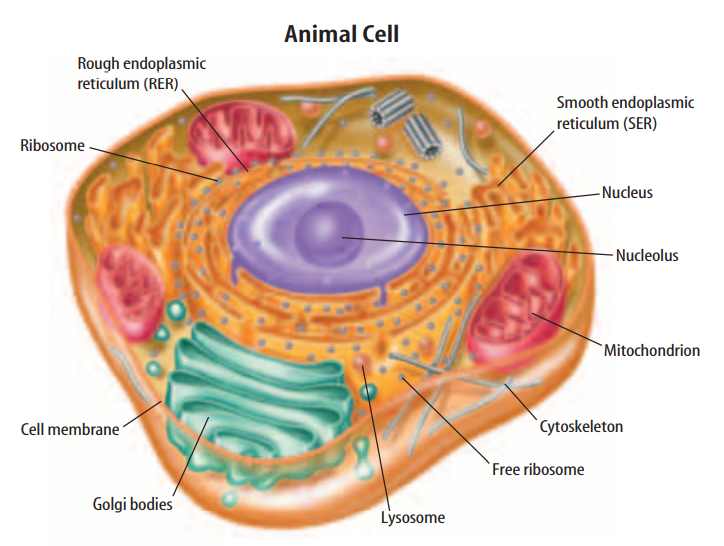
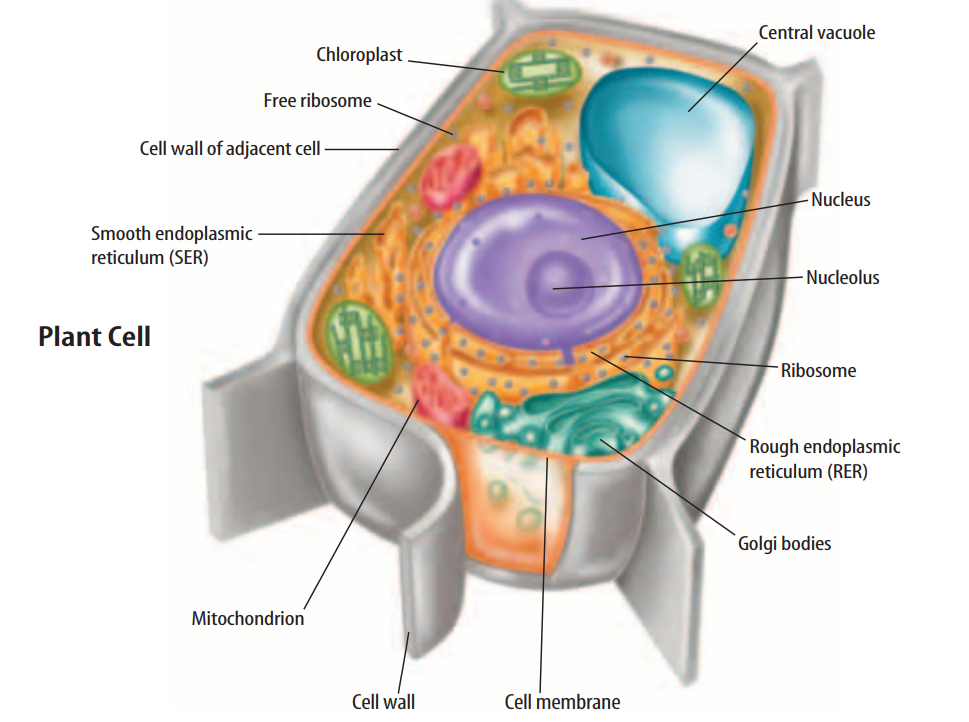
All cellular activities are directed by the nucleus. Materials enter and leave the nucleus through openings in its membrane. The nucleus contains long, threadlike, hereditary material made of DNA. DNA is the chemical that contains the code for the cell’s structure and activities. A structure called a nucleolus also is found in the nucleus, and is where most ribosomes are made in a eukaryotic cell.
In plant cells, food is made in green organelles in the cytoplasm called chloroplasts (KLOR uh plasts, “chloro” – the Greek word for “green.”, –plasty is used like a suffix meaning for “molding, formation.”). Chloroplasts contain the green pigment (or color) chlorophyll (=phyll suffixis used like a suffix meaning for “leaf” ), which gives many leaves and stems their color. Chlorophyll captures light energy that is used to make a sugar called glucose. Glucose comes from the Greek word for “sweet.” It’s a type of sugar you get from foods you eat, and your body uses it for energy.
The energy in food usually is released by mitochondria (mi tuh KAHN dree uh) (singular, mitochondrion). Inside these organelles, energy is released when food is broken down into carbon dioxide and water. Some types of cells, such as muscle cells, have larger numbers of mitochondria. Both chloroplasts and mitochondria contain ribosomes and hereditary material.
The endoplasmic reticulum (ER) (affix (plasm) refers to the material forming cells and can also mean a living substance; reticulo- , reticul-, reticuli- [L. reticulum, little net, network] Prefixes meaning network.) is a series of folded membranes in which materials can be processed and moved around inside of the cell. It extends from the nucleus to the cell membrane and takes up a considerable amount of space in some cells. The ER may be “rough” or “smooth.” Ribosomes are attached to areas on the rough ER. There they make proteins that are moved out of the cell or used within the cell. ER that does not have attached ribosomes is called smooth ER. This type of ER processes cellular substances such as lipids that store energy.
The Golgi (GAWL jee) bodies are stacked, flattened membranes. The Golgi bodies sort proteins and other cellular substances and package them into membrane-bound structures called vesicles. The vesicles deliver cellular substances to areas inside the cell, and carry cellular substances to the cell membrane where they are released to the outside of the cell.
Cells also have membrane-bound spaces called vacuoles (Latin word vacuus, empty. But the vacuole usually contains a watery fluid) for the temporary storage of materials. A vacuole can store water, waste products, food, and other cellular materials. In plant cells, the central vacuole can make up most of the cell’s volume.
Organelles called lysosomes (LI suh sohmz) contain digestive chemicals (enzymes) that help break down food molecules, cell wastes, worn-out cell parts, and viruses and bacteria that enter a cell.
A tissue is a group of similar cells that work together to do one job. Each cell in a tissue does its part to keep the tissue alive. An organ is a structure made up of two or more different types of tissues that work together. A group of organs working together to perform a certain function is an organ system.
A virus is a strand of hereditary material surrounded by a protein coating. Viruses don’t have a nucleus, other organelles, or a cell membrane. A virus multiplies by making copies of itself with the help of a living cell called a host cell.
When a virus enters a cell and is active, it causes the host cell to make new viruses. This process destroys the host cell.
Some viruses can be inactive, and are called latent. This means that after the virus enters a host cell, its hereditary material becomes part of the host cell’s hereditary material. It does not immediately cause the host cell to make new viruses or destroy it. As the host cell reproduces, the hereditary material of the virus is copied. A virus can be latent for many years. Then, certain conditions, either inside or outside the cell, cause the latent virus to become an active virus.
cold sore
protist, any member of a group of diverse eukaryotic, predominantly unicellular microscopic organisms.
bacteriophages: The combining form -phage is used like a suffix meaning “a thing that devours.” It is used in many scientific terms, especially in biology.
Inhale: breathe in (air, gas, smoke, etc.).
One way your body can stop viral infections is by making interferons (animal protein, 1957, coined in English from interfere + subatomic particle suffix -on; so called because it “interferes” with the reduplication of viruses.). Interferons are proteins that protect cells from viruses. These proteins are produced rapidly by infected cells and move to noninfected cells in the host. They cause the noninfected cells to produce protective substances.
Public health measures for preventing viral diseases include vaccinating people, improving sanitary (The origin of sanitary is the Latin word sanitas, or “health,” which means clean, germ-free) conditions, separating patients with viral diseases, and controlling animals that spread viral diseases. Antibiotics are used to treat bacterial infections, but they do not work against viral diseases. Antiviral drugs can be given to infected patients to help fight a virus; but, they are not widely used because of adverse side effects.A vaccine is made from weakened virus particles that cause your body to produce interferons to fight the infection.Vaccines have been made to prevent many diseases, including measles, mumps, smallpox, chicken pox, polio, and rabies.
HIV stands for human immuno-deficiency virus, a virus that attacks the immune system. The immune (.having a high degree of resistance to an illness or disease. The adjective immune comes from the Latin word immunis, which means “exempt from public service.” If you’re protected — or exempt — from disease, injury, work, insults, or accusations, then you’re immune.) system is the system that protects your body from disease. Eventually, this virus infection leads to Acquired Immune Deficiency Syndrome, or AIDS. A weak immune system means the body cannot fight other diseases and infections, like pneumonia (lung infection) and certain types of cancer.
plastic petri dishes
Distilled water is steam from boiling water that’s been cooled and returned to its liquid state.
batch: arrange (things) in sets or groups.
Chapter 9-11
Matter is anything that has mass and takes up space. Energy is anything that brings about change. Everything in your environment, including you, is made of matter. Energy can hold matter together or break it apart.
The words atoms, molecules, and compounds are used to describe substances. Some elements, like oxygen,occur as molecules. These molecules contain atoms of the same element bonded together. Compounds also are composed of molecules. Molecules of compounds contain atoms of two or more different elements bonded together, as shown by these water molecules.
a pitcher of: a jug of water. Pitcher, a large container, typically earthenware, glass, or plastic, with a handle and a lip, used for holding and pouring liquids.
Compounds have properties different from the elements they are made of. There are two types of compounds–molecular compounds and ionic compounds.
The smallest part of a molecular compound is a molecule. A molecule is a group of atoms held together by the energy of chemical bonds. When chemical reactions occur, chemical bonds break, atoms are rearranged, and new bonds form. The molecules produced are different from those that began the chemical reaction.
Molecular compounds form when different atoms share their outermost electrons.
Potassium is the chemical element with the symbol K and atomic number 19.
A mixture is a combination of substances in which individual substances retain their own properties. Mixtures can be solids, liquids,
gases, or any combination of them.
Perspire: give out sweat through the pores of the skin as a result of heat, physical exertion, or stress.
Unlike solutions, the substances in a suspension eventually sink to the bottom.
lipid: a substance such as a fat, oil, or wax that dissolves in alcohol but not in water and is an important part of living cells.
Carbohydrates are organic molecules that supply energy for cell processes. Sugars and starches are carbohydrates that cells use for energy. Some carbohydrates also are important parts of cell structures. For example, a carbohydrate called cellulose is an important part of plant cells.
Starch is a carbohydrate commonly found in nature and one of the primary sources of food energy for human beings. It is regularly eaten in the form of wheat, rice, potatoes, and other staple foods cultivated throughout the world.
Lipids Another type of organic compound found in living things is a lipid. Lipids do not mix with water. Lipids such as fats and oils store and release even larger amounts of energy than carbohydrates do. One type of lipid, the phospholipid, is a major part of cell membranes.
Organic compounds called proteins have many important functions in living organisms. They are made up of smaller molecules called amino acids. Certain proteins called enzymes regulate nearly all chemical reactions in cells.
Large organic molecules that store important coded information in cells are called nucleic acids. One nucleic acid, deoxyribonucleic (dee AHK sih ri boh noo klee ihk) acid, or DNA is the genetic material found in all cells at some point in their lives. It carries information that directs each cell’s activities. Another nucleic acid, ribonucleic (ri boh noo klee ihk) acid, or RNA, is needed to make enzymes and other proteins.
Most inorganic compounds are made from elements other than carbon. Generally, inorganic molecules contain fewer atoms than organic molecules.
insulater: a substance which does not readily allow the passage of heat or sound.
A cell’s membrane is selectively permeable (PUR mee uh bul) (The word part “per-” is a prefix that means “through”.). It allows some things to enter or leave the cell while keeping other things outside or inside the cell.
The movement of substances through the cell membrane without the input of energy is called passive transport.
The random movement of molecules from an area where there is relatively more of them into an area where there is relatively fewer of them is called diffusion. The adjective comes from Latin diffusus, from diffundere “to pour in different directions,” from the prefix dis- “apart” plus fundere, “to pour.” Diffusion is one type of cellular passive transport. Molecules of a substance will continue to move from one area into another until the relative number of these molecules is equal in the two areas. When this occurs,equilibrium is reached and diffusion stops. After equilibrium occurs, it is maintained because molecules continue to move.
The diffusion of water through a cell membrane is called osmosis.
Cells take in many substances. Some substances pass easily through the cell membrane by diffusion. Other substances, such as sugar molecules, are so large that they can enter the cell only with the help of molecules in the cell membrane called transport proteins. This process, a type of passive transport, is known as facilitated diffusion. Facilitate, from the Latin ‘facile’ – loosely meaning ‘to make easy’.
When an input of energy is required to move materials through a cell membrane, active transport takes place.Active transport involves transport proteins, just as facilitated diffusion does. In active transport, a transport protein binds with the needed particle and cellular energy is used to move it through the cell membrane. When the particle is released, the transport protein can move another needed particle through the membrane.
Large protein molecules and bacteria, for example, can enter a cell when they are surrounded by the cell membrane. The cell membrane folds in on itself, enclosing the item in a sphere called a vesicle. Vesicles are transport and storage structures in a cell’s cytoplasm.The process of taking substances into a cell by surrounding it with the cell membrane is called endocytosis (en duh si TOH sus).The prefix endo- means within, absorbing, or containing. The middle part, -cyto- means cell, while the suffix -sis means the process of doing something. The contents of a vesicle can be released by a cell using the process called exocytosis (ek soh si TOH sus).
The total of all chemical reactions in an organism is called metabolism.
Organisms that make their own food,such as plants, are called producers.Organisms that cannot make their own food are called consumers.
The process they use is called photosynthesis. During photosynthesis, producers use light energy and make sugars,which can be used as food.
Your muscle cells were using the oxygen for the process of cellular respiration. During cellular respiration, chemical reactions occur that break down food molecules into simpler substances and release their stored energy. Just as in photosynthesis, enzymes are needed for the chemical reactions of cellular respiration.
Your muscle cells were using the oxygen for the process of cellular respiration. During cellular respiration, chemical reactions occur that break down food molecules into simpler substances and release their stored energy. Just as in photosynthesis, enzymes are needed for the chemical reactions of cellular respiration.
When cells do not have enough oxygen for cellular respiration, they use a process called fermentation to release some of the energy stored in glucose molecules.
Like cellular respiration, fermentation begins in the cytoplasm. Again, as the glucose molecules are broken down, energy is released. But the simple molecules from the breakdown of glucose do not move into the mitochondria. Instead, more chemical reactions occur in the cytoplasm. These reactions release some energy and produce wastes. Depending on the type of cell, the wastes may be lactic acid (Lacto- is a combining form used like a prefix meaning “milk.”) or alcohol and carbon dioxide, as shown in Figure 15. Your muscle cells can use fermentation (origin: Latin fermentum ‘yeast’) to change the simple molecules into lactic acid while releasing energy. The presence of lactic acid is why your muscles might feel stiff and sore after exercising.
How are photosynthesis, cellular respiration, and fermentation related? Some producers use photosynthesis to make food. All living things use respiration or fermentation to release energy stored in food. If you think carefully about what happens during photosynthesis and respiration, you will see that what is produced in one is used in the other. These two processes are almost the opposite of each other.Photosynthe-sis produces sugars and oxygen, and respiration uses these products. The carbon dioxide and water produced during respiration are used during photosynthesis. Most life would not be possible without these important chemical reactions.
Bromthymol Blue is a dye used as an indicator in determining pH.
Using aged water has many advantages, the first of which is that the water is chlorine-free and safe for the fish. Second, water aged for a few days is more stable. Sometimes, water from the tap contains dissolved gasses that may affect water parameters.
Carbonated water is water containing dissolved carbon dioxide gas, either artificially injected under pressure or occurring due to natural geological processes.
Stirring rods,as laboratory equipment, used in mixing chemicals and liquids.
sprig, a small stem bearing leaves or flowers, taken from a bush or plant.
shingle, a mass of small rounded pebbles, especially on a seashore.
Mitosis is a type of cell division in which one cell (the mother) divides to produce two new cells (the daughters) that are genetically identical to itself. In the context of the cell cycle, mitosis is the part of the division process in which the DNA of the cell’s nucleus is split into two equal sets of chromosomes.
Bone marrow is a spongy substance found in the center of the bones. It manufactures bone marrow stem cells and other substances, which in turn produce blood cells.
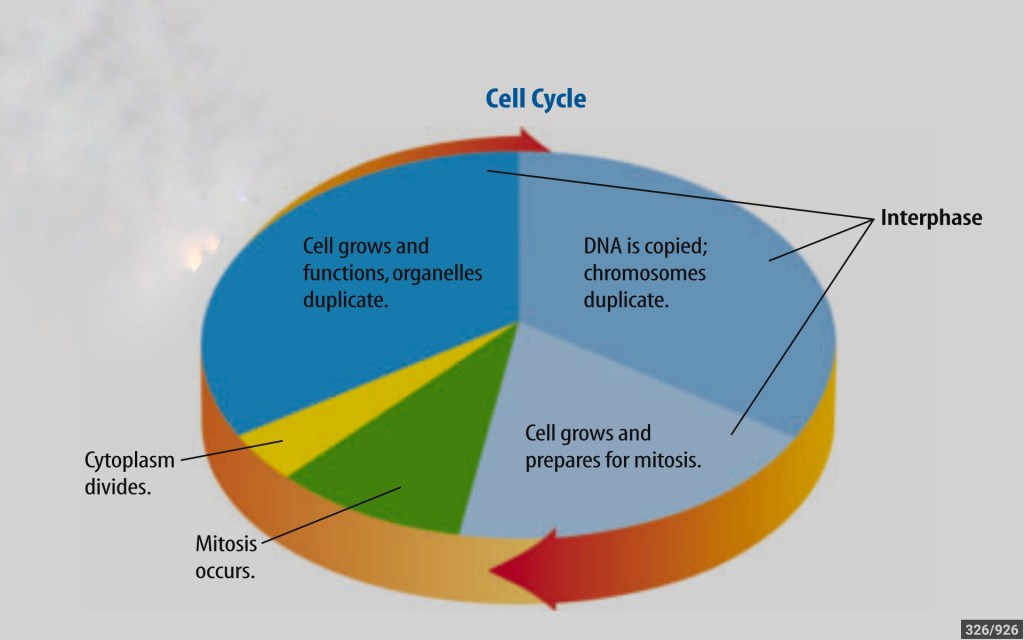
Most of the life of any eukaryotic cell–a cell with a nucleus–is spent in a period of growth and development called interphase.
In most cells,the cell cycle is well controlled. Cancer cells, however, have uncontrolled cell division. Doctors who diagnose, study, and treat cancer are called oncologists.
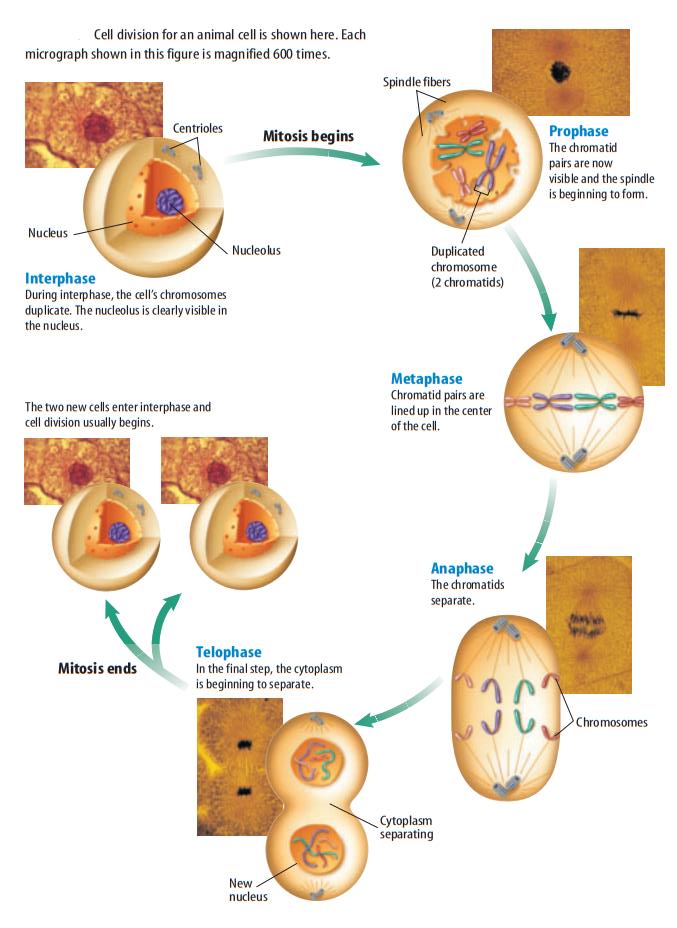
The process in which the nucleus divides to form two identical nuclei is mitosis (mi TOH sus, from Greek mitos ‘thread’. ). Each new nucleus also is identical to the original nucleus.Mitosis is described as a series of phases, or steps.The steps of mitosis in order are named prophase,metaphase, anaphase, and telophase.
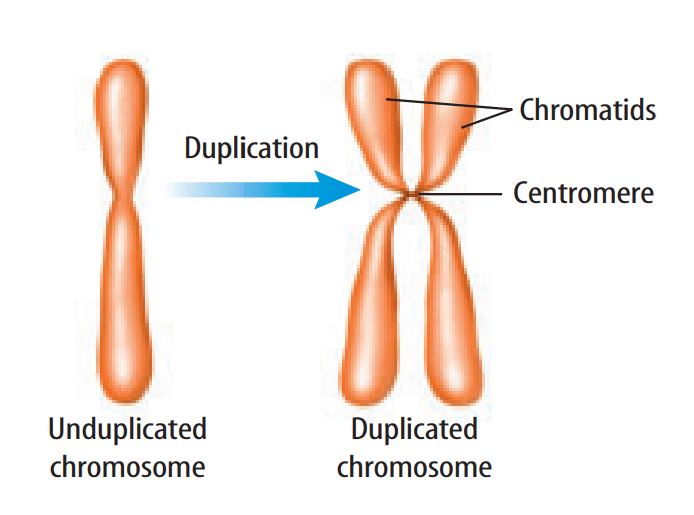
A chromosome is a structure in the nucleus that contains hereditary material. During interphase, each chromosome duplicates. When the nucleus is ready to divide, each duplicated chromosome coils tightly into two thickened, identical strands (means thread or string) called chromatids (one of the usually paired and parallel strands of a duplicated chromosome joined by a single centromere, a constricted/narrowed region of a chromosome).
During prophase, the pairs of chromatids are fully visible when viewed under a microscope. The nucleolus and the nuclear membrane disintegrate (break into two parts). Two small structures called centrioles (SEN tree olz) move to opposite ends of the cell. Between the centrioles, threadlike spindle fibers (form a protein structure that divides the genetic material in a cell.) begin to stretch across the cell. Plant cells also form spindle fibers during mitosis but do not have centrioles. In metaphase, the pairs of chromatids line up across the center of the cell. The centromere of each pair usually becomes attached to two spindle fibers–one from each side of the cell. In anaphase, each centromere divides and the spindle fibers shorten. Each pair of chromatids separates, and chromatids begin to move to opposite ends of the cell. The separated chromatids are now called chromosomes. In the final step, telophase, spindle fibers start to disappear, the chromosomes start to uncoil (straighten or cause to straighten from a coiled or curled position), and two new nuclei form.
In asexual reproduction, a new organism (sometimes more than one) is produced from one organism. The new organism will have hereditary material identical to the hereditary material of the parent organism.
Instead, bacteria reproduce asexually by fission. During fission, the one-celled bacterium without a nucleus copies its genetic material and then divides into two identical organisms.
Budding is a type of asexual reproduction made possible because of mitosis and cell division. When the bud on the adult becomes large enough, it breaks away to live on its own.
During sexual reproduction, two sex cells, sometimes called an egg and a sperm, come together. Sex cells, are formed from cells in reproductive organs. Sperm are formed in the male reproductive organs. Eggs are formed in the female reproductive organs. The joining of an egg and a sperm is called fertilization, and the cell that forms is called a zygote (ZI goht, greek word “zygotos” meaning “joined or yoked or to yoke).
A typical human body cell has 46 chromosomes, and a human sex cell has 23 chromosomes.
When cells have pairs of similar chromosomes, they are said to be diploid (DIH ployd). Because sex cells do not have pairs of chromosomes, they are said to be haploid (HA ployd). They have only half the number of chromosomes as body cells. Haploid means “single form.”
A process called meiosis (mi OH sus, modern Latin, from Greek meiōsis, from meioun ‘lessen’, from meiōn ‘less’) produces haploid sex cells.
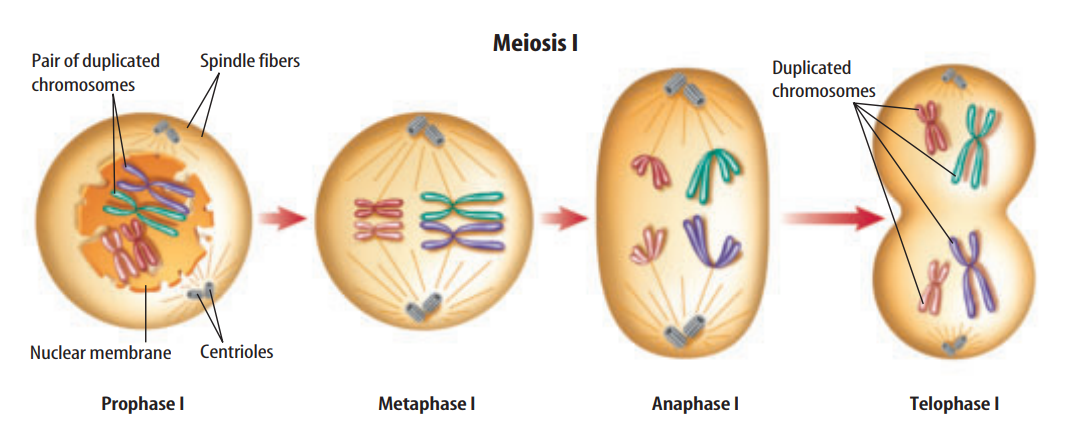
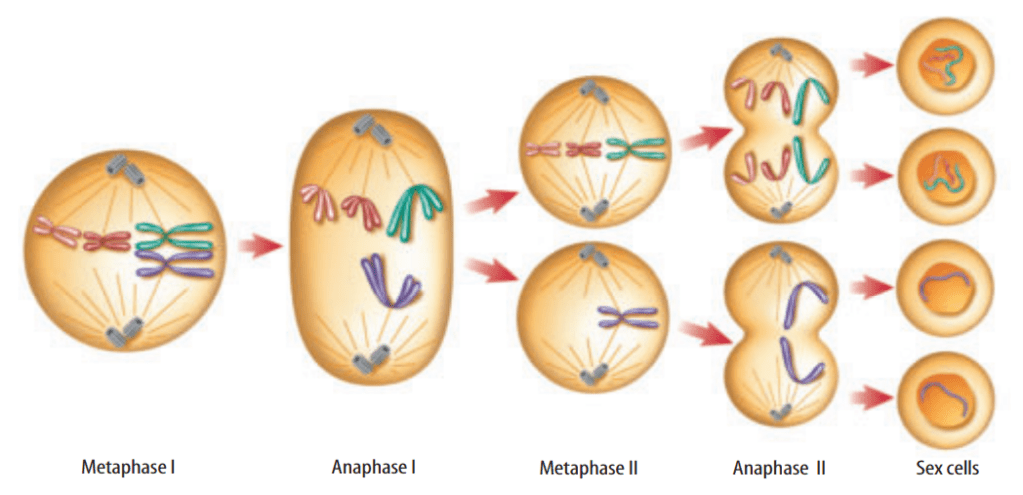
The offspring would have twice as many chromosomes as its parent. Although plants with twice the number of chromosomes as the parent plants are often produced, most animals do not survive with a double number of chromosomes. After two haploid sex cells combine, a diploid zygote is produced that develops into a new diploid organism. During meiosis, two divisions of the nucleus occur. These divisions are called meiosis I and meiosis II. The steps of each division have names like those in mitosis and are numbered for the division in which they occur. The two divisions of the nucleus result in four sex cells.
In metaphase I, the pairs of duplicated chromosomes line up in the center of the cell. The centromere of each chromatid pair becomes attached to one spindle fiber, so the chromatids do not separate in anaphase I. The two pairs of chromatids of each similar pair move away from each other to opposite ends of the cell. Each duplicated chromosome still has two chromatids. Then, in telophase I, the cytoplasm divides, and two new cells form. Each new cell has one duplicated chromosome from each similar pair.
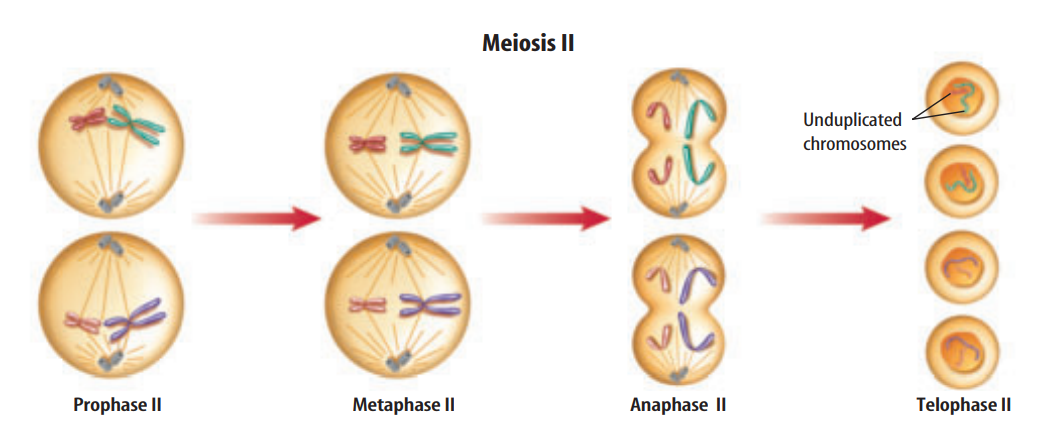
The two cells formed during meiosis I now begin meiosis II. The chromatids of each duplicated chromosome will be separated during this division. In prophase II, the duplicated chromosomes and spindle fibers reappear in each new cell. Then in metaphase II, the duplicated chromosomes move to the center of the cell. Unlike what occurs in metaphase I, each centromere now attaches to two spindle fibers instead of one. The centromere divides during anaphase II. The chromatids separate and move to opposite ends of the cell. Each chromatid now is an individual chromosome. As telophase II begins, the spindle fibers disappear, and a nuclear membrane forms around each set of chromosomes. When meiosis II is finished, the cytoplasm divides.
The reason for sterile hybrids is simple – there is an odd number of chromosomes in a hybrid organism. To create a zonkey, you must combine a plains zebra (44 chromosomes) with a donkey (62 chromosomes).
A cell also uses a code that is stored in its hereditary material. The code is a chemical called
deoxyribonucleic (dee AHK sih ri boh noo klay ihk) acid, or DNA. It contains information for an organism’s growth and function.
also desoxyribose, 1931, from deoxy- (because the 2′ hydroxyl (-OH) in the sugar is in this case reduced to a hydrogen (H) by loss of an oxygen) + ribose.
“referring to a nucleus,” 1892, in nucleic acid, which is a translation of German Nukleinsäure (1889), from Nuklein “substance obtained from a cell nucleus” (see nucleus + -in (2)) + -ic.
spool: a cylindrical device which has a rim or ridge at each end and an axial hole for a pin or spindle and on which material (such as thread, wire, or tape) is wound.
In 1952, scientist Rosalind Franklin discovered that DNA is two chains of molecules in a spiral form. By using an X-ray technique, Dr. Franklin showed that the large spiral was probably made up of two spirals. As it turned out, the structure of DNA is similar to a twisted ladder. In 1953, using the work of Franklin and others, scientists James Watson and Francis Crick made a model of a DNA molecule.
According to the Watson and Crick DNA model, each side of the ladder is made up of sugar-phosphate molecules. Each molecule consists of the sugar called deoxyribose (dee AHK sih ri bohs) and a phosphate (a salt or ester of phosphoric acid) group. The rungs (a strengthening crosspiece in the structure of a chair) of the ladder are made up of other molecules called nitrogen bases. DNA has four kinds of nitrogen bases—adenine (A duh neen), guanine (GWAH neen), cytosine (SI tuh seen), and thymine (THI meen). The nitrogen bases are represented by the letters A, G, C, and T. The amount of cytosine in cells always equals the amount of guanine, and the amount of adenine always equals the amount of thymine. This led to the hypothesis that the nitrogen bases occur as pairs in DNA.
DNA REPLICATION
Proteins build cells and tissues or work as enzymes. The instructions for making a specific protein are found in a gene which is a section of DNA on a chromosome.
Genes are found in the nucleus, but proteins are made on ribosomes in cytoplasm. The codes for making proteins are carried from the nucleus to the ribosomes by another type of nucleic acid called ribonucleic acid, or RNA.
RNA is made in the nucleus on a DNA pattern but is different from DNA. If DNA is like a ladder, RNA is like a ladder that has all its rungs cut in half.
RNA has the nitrogen bases A, G, and C like DNA but has the nitrogen base uracil (U) instead of thymine (T). The sugar-phosphate molecules in RNA contain the sugar ribose, not deoxyribose.
The three main kinds of RNA made from DNA in a cell’s nucleus are messenger RNA (mRNA), ribosomal RNA (rRNA), and transfer RNA (tRNA). Protein production begins when mRNA moves into the cytoplasm. There, ribosomes attach to it. Ribosomes are made of rRNA. Transfer RNA molecules in the cytoplasm bring amino acids to these ribosomes. Inside the ribosomes, three nitrogen bases on the mRNA temporarily match with three nitrogen bases on the tRNA. The same thing happens for the mRNA and another tRNA molecule. The amino acids that are attached to the two tRNA molecules bond. This is the beginning of a protein.
The code carried on the mRNA directs the order in which the amino acids bond. After a tRNA molecule has lost its amino acid, it can move about the cytoplasm and pick up another amino acid just like the first one. The ribosome moves along the mRNA. New tRNA molecules with amino acids match up and add amino acids to the protein molecule.
rehearse: practice (a play, piece of music, or other work) for later public performance.
If DNA is not copied exactly, the proteins made from the instructions might not be made correctly. These mistakes, called mutations, are any permanent change in the DNA sequence of a gene or chromosome of a cell. Some mutations include cells that receive an entire extra chromosome or are missing a chromosome. Outside factors such as X rays, sunlight, and some chemicals have been known to cause mutations.
time elapse
dimples
Heredity (huh REH duh tee) is the passing of traits from parent to offspring.
“Allele” is the word that we use to describe the alternative form or versions of a gene. Alleles are matching genes; one from our biological mother, one from our biological father.
The study of how traits are inherited through the interactions of alleles is the science of genetics.
orchard
hybrid: the offspring of two plants or animals of different species or varieties.
An organism that always produces the same traits generation after generation is called a purebred.
pollinate: convey pollen, essential for sexual reproduction of flowering plants and plants that produce cones, to or deposit pollen on (a stigma, ovule, flower, or plant) and so allow fertilization.
cross-pollination
The dominant (DAH muh nunt) factor because it dominated, or covered up, the short form. The form that seemed to disappear the recessive (rih SE sihv) factor.
Mutations can result in dominant or recessive genes. A recessive characteristic can appear only if an organism has two recessive genes for that characteristic. However, a dominant characteristic can appear if an organism has one or two dominant genes for that characteristic.
Probability is a branch of mathematics that helps you predict the chance that something will happen.
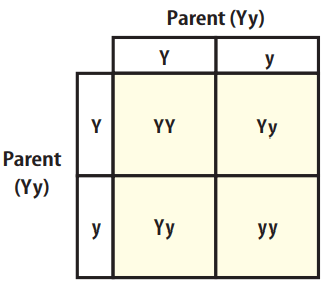
A handy tool used to predict results in Mendelian genetics is the Punnett (PUH nut) square.
An uppercase letter stands for a dominant allele. A lowercase letter stands for a recessive allele. The letters are a form of code. They show the genotype (JEE nuh tipe), or genetic makeup, of an organism.
The way an organism looks and behaves as a result of its genotype is its phenotype (FEE nuh tipe).
An organism with two alleles that are the same is called homozygous (hoh muh ZI gus, word origin: homo- “same” + zygote + -ous. ) for that trait. AA, aa
An organism that has two different alleles is called heterozygous (he tuh roh ZI gus, word origin: hetero- “other, different” + zygote + -ous. ) for that trait. Aa
Principles of Heredity
1 Traits are controlled by alleles on chromosomes.
2 An allele’s effect is dominant or recessive.
3 When a pair of chromosomes separates during
meiosis, the different alleles for a trait move
into separate sex cells.
When the offspring of two homozygous parents show an intermediate phenotype, this inheritance is called incomplete dominance.
Many traits are controlled by more than two alleles. A trait that is controlled by more than two alleles is said to be controlled by multiple alleles. Traits controlled by multiple alleles produce more than three phenotypes of that trait.
Blood type in humans is an example of multiple alleles that produce only four phenotypes. The alleles for blood types are called A, B, and O. The O allele is recessive to both the A and B alleles. When a person inherits one A allele and one B allele for blood type, both are expressed—phenotype AB. A person with phenotype A blood has the genetic makeup, or genotype—AA or AO. Someone with phenotype B blood has the genotype BB or BO. Finally, a person with phenotype O blood has the genotype OO.
Polygenic (pah lih JEH nihk) inheritance occurs when a group of gene pairs acts together to produce a trait.
Your environment plays a role in how some of your genes are expressed or whether they are expressed at all. Himalayan rabbits have alleles for dark-colored fur. However, this allele is able to express itself only at lower temperatures. Only the areas located farthest from the rabbit’s main body heat (ears, nose, feet, tail) have dark-colored fur.
embryo, fetus: an offspring of a human or other mammal in the stages of prenatal development that follow the embryo stage (in humans taken as beginning eight weeks after conception).
cystic fibrosis: CF is quite rare in Asian populations. It is the most common genetic disorder that can lead to death among Caucasian Americans.
Mucus has an important role in your body. It’s made by cells in your mouth, throat, nose and sinuses. Its slippery consistency helps protect and moisturize, and traps potential irritants (a thing that is continually annoying or distracting.).
A sex-linked gene is an allele on a sex chromosome.
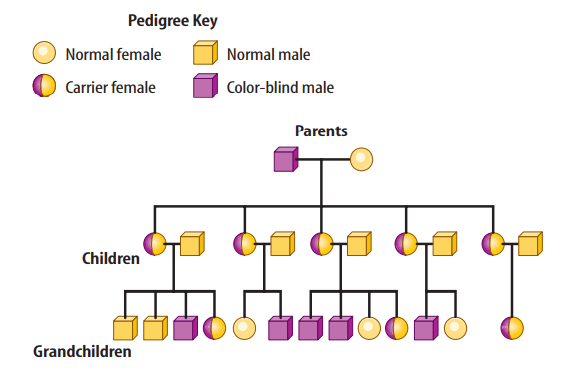
A pedigree is a visual tool for following a trait through generations of a family.
Through genetic engineering, scientists are experimenting with biological and chemical methods to change the arrangement of DNA that makes up a gene.
recombinant DNA: made by inserting a useful segment of DNA from one organism into a bacterium.
pancreases
Insulin is a hormone created by your pancreas that controls the amount of glucose in your bloodstream at any given moment.
Gene transfer: a goal of this experimental procedure is to replace
abnormal genetic material with normal genetic material.
Chapter 12
A species is a group of organisms that share similar characteristics and can reproduce among themselves to produce fertile offspring.
In the mid 1800s, Darwin developed a theory of evolution that is accepted by most scientists today. He described his ideas in a book called On the Origin of Species, which was published in 1859.
Natural selection means that organisms with traits best suited to their environment are more likely to survive and reproduce. Their traits are passed to more offspring. All living organisms produce more offspring than survive. Members of a large population compete for living space, food, and other resources. Those that are best able to survive are more likely to reproduce and pass on their traits to the next generation.
A variation is an inherited trait that makes an individual different from other members of its species.
An adaptation is any variation that makes an organism better suited to its environment.
Camouflage allows organisms to blend into their environments.
The model that describes evolution as a slow, ongoing process by which one species changes to a new species is known as gradualism. According to the gradualism model, a continuing series of mutations and variations over time will result in a new species.
Gradualism doesn’t explain the evolution of all species. For some species, the fossil record shows few intermediate forms—one species suddenly changes to another. According to the punctuated equilibrium model, rapid evolution comes about when the mutation of a few genes results in the appearance of a new species over a relatively short period of time.
Another concept explanation of punctuated equilibrium: evolutionary change is characterised by short periods of rapid evolution followed by longer periods of stasis in which no change occurs.
intermediate: in between, middle
indicate: show
As in any population, some organisms have variations that allow them to survive unfavorable living conditions when other organisms cannot. When penicillin was used to kill bacteria, those with the penicillin-resistant variation survived, reproduced, and passed this trait to their offspring. Over a period of time, this bacteria population became penicillin-resistant.
sequins: A sequin is a small, typically shiny, generally disk-shaped ornament. Round, flat sequins.
paleontologists—scientists who study the past by collecting and examining fossils.
jutting out of
A fossil is the remains, an imprint, or a trace of a prehistoric organism.
Relative dating is based on the idea that in undisturbed areas, younger rock layers are deposited on top of older rock layers. Relative dating provides only an estimate of a fossil’s age. The estimate is made by comparing the ages of rock layers found above and below the fossil layer.
A radioactive element gives off a steady amount of radiation as it slowly changes to a nonradioactive element. This method of dating does not always produce exact results, because the original amount of radioactive element in the rock can never be determined for certain.
GEOLOGIC TIME SCALE

Entomologist: a scientist who studies insects.
The study of embryos and their development is called embryology (em bree AH luh jee).
vertebrate: Latin vertebratus (Pliny), meaning joint of the spine. An animal of a large group distinguished by the possession of a backbone or spinal column, including mammals, birds, reptiles, amphibians, and fishes.
pharyngeal pouches: pharynx (/ˈfærɪŋks/) , is derived from the Greek, means throat, pouch means bag.
porpoise: a kind of dolphin.
homologous: medieval Latin from Greek homologos ‘agreeing, consistent’, from homos ‘same’ + logos ‘ratio, proportion’.
Body parts that are similar in origin and structure are called homologous (hoh MAH luh gus). Homologous structures also can be similar in function. They often indicate that two or more species share common ancestors.
The bodies of some organisms include vestigial (veh STIH jee ul, Latin, vestigium, meaning “footprint, trace.”) structures—structures that don’t seem to have a function. Vestigial structures also provide evidence for evolution.
Hemoglobin (prefix hemo- means blood, suffix -globin means protein) is a protein in your red blood cells that carries oxygen to your body’s organs and tissues and transports carbon dioxide from your organs and tissues back to your lungs.
orangutans: great apes.
primate: a member of the most developed and intelligent group of mammals, including humans, monkeys, and apes.
opposable thumbs: A thumb that can be placed opposite the fingers of the same hand.
Primates are divided into two major groups. The first group, the strepsirhines (STREP suh rines, Greek strépsis means turning or inward, rhinos means nose), includes lemurs and tarsiers like those shown in Figure 17. The second group, haplorhines (HAP luh rines, Greek haploûs means simple, rhinos means nose), includes monkeys, apes, and humans.
About 4 million to 6 million years ago, humanlike primates appeared that were different from the other primates. These ancestors, called hominids, ate both meat and plants and walked upright on two legs. Hominids shared some characteristics with gorillas, orangutans, and chimpanzees, but a larger brain separated them from the apes.
The hominid was named Homo habilis, meaning “handy man,” because simple stone tools were found near him. Homo habilis is estimated to be 1.5 million to 2 million years old. Based upon many fossil comparisons, scientists have suggested that Homo habilis gave rise to another species, Homo erectus (means “upright man“), about 1.6 million years ago.
quarry: a place, typically a large, deep pit, from which stone or other materials are or have been extracted.
Australopithecus: latin australis ‘southern’, pithēkos ‘ape’. southern ape.
The fossil record indicates that Homo sapiens, means “wise man” evolved about 400,000 years ago. By about 125,000 years ago, two early human groups, Neanderthals (nee AN dur tawlz) and Cro-Magnon humans probably lived at the same time in parts of Africa and Europe.
Short, heavy bodies with thick bones, small chins, and heavy browridges were physical characteristics of
Neanderthals. Family groups lived in caves and used well-made stone tools to hunt large animals. Neanderthals disappeared from the fossil record about 30,000 years ago.
Cro-Magnon fossils have been found in Europe, Asia, and Australia and date from 10,000 to about 40,000 years in age. Standing about 1.6 m to 1.7 m tall, the physical appearance of Cro-Magnon people was almost the same as that of modern humans. They lived in caves, made stone carvings, and buried their dead. The oldest recorded art has been found on the walls of caves in France, where Cro-Magnon humans first painted bison, horses, and people carrying spears. Cro-Magnon humans are thought to be direct ancestors of early humans, Homo sapiens. Evidence indicates that modern humans, Homo sapiens sapiens, evolved from Homo sapiens.


Leave a comment