pervasiveness: the quality of spreading widely or being present throughout an area or a group of people.
The term government describes the means by which a society organizes itself and how it allocates authority in order to accomplish collective goals and provide benefits that the society as a whole needs.
The term politics refers to the process of gaining and exercising control within a government for the purpose of setting and achieving particular goals, especially those related to the division of resources within a nation.
The economic system of capitalism in Western Europe and North America developed at roughly the same time as ideas about democratic republics, self-government, and natural rights. At this time, the idea of liberty became an important concept.
According to John Locke, an English political philosopher of the seventeenth century, all people have natural rights to life, liberty, and property. From this came the idea that people should be free to consent to being governed.
consent: give permission for something to happen.
exert: bring to bear
inferior: not as good
utility: a service that is used by the public, such as an electricity or gas supply.
oligarchy: a small group of people having control of a country, organization, or institution.
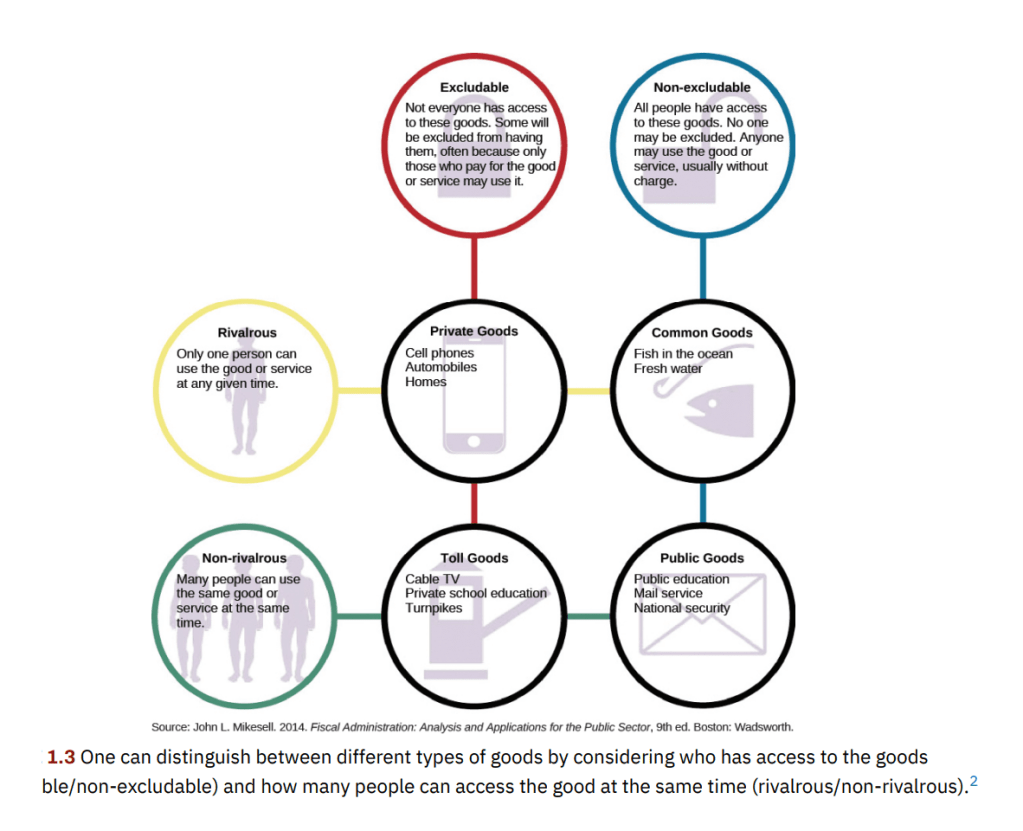
private goods
Such goods or services that are available to all without charge are called public goods. Two such public goods are national security and education.
compel citizen compliance
equivalent: equal in value, amount, function, meaning, etc.
Private schooling is a type of good called a toll good. Toll goods are available to many people, and many people can make use of them, but only if they can pay the price.
occupant: a person who resides or is present in a house, vehicle, seat, place, etc., at a given time.
intruder: a person who intrudes, especially into a building with criminal intent.
common goods: goods that all people may use free of charge but that are of limited supply, such as fish in the sea or clean drinking water.
regulate: control or maintain the rate or speed of (a machine or process) so that it operates properly.
depriving: deny (a person or place) the possession or use of something.
sustainability: the ability to be maintained at a certain rate or level.
respective: belonging or relating separately to each of two or more people or things.
jurisdiction: the official power to make legal decisions and judgments.
imposition: the act of establishing a rule or law to be obeyed.
[the imposition of new taxes]
measure: a way of achieving something, or a method for dealing with a situation. [pass measures]
allot: give or apportion (something) to someone as a share or task.
[fair operation of the business marketplace]
Politics is the process of who gets what and how. Politics involves choosing which values government will support and which it will not.
egalitarianism: the doctrine that all people are equal and deserve equal rights and opportunities.
[tapping of people’s phones]
extent: the area covered by something.
Civic engagement, or the participation that connects citizens to government, is a vital ingredient of politics.
initiative: an act or strategy intended to resolve a difficulty or improve a situation; a fresh approach to something.
deprive: deny (a person or place) the possession or use of something.
atheist: a person who disbelieves or lacks belief in the existence of God or gods.
proposed law: A bill is a proposed law as introduced in the Legislature.
referendum: a general vote by the electorate on a single political question which has been referred to them for a direct decision.
In a monarchy, one ruler, usually a hereditary ruler, holds political
power. Although the power of some monarchs is limited by law, and such kings and queens often rule along with an elected legislature that makes laws for the country, this is not always the case.
Under totalitarianism, the government is more important than the citizens, and it controls all aspects of citizens’ lives. Citizens’ rights are limited, and the government does not allow political criticism or opposition.
tradeoff: a balance achieved between two desirable but incompatible features; a compromise.
[elite theory]
[pluralist theory]
rest with: depend on
prestigious: inspiring respect and admiration; having high status.
apparent: clearly visible or understood; obvious.
[associate’s degree]
levy: impose (a tax, fee, or fine).
[ A flat tax]
impact: the action of one object coming forcibly into contact with another.
Currently, about half of the members of Congress are millionaires. As of 2009, approximately 38 percent of Congress sent their children to private schools. Overall, only 11 percent of the American population did so. Therefore, a Congress dominated by millionaires who send their children to private schools is more likely to believe that a flat tax is fair and that increased funding for public education is not a necessity.
Their experience, however, does not reflect the experience of average Americans. Pluralist theory rejects this approach, arguing that although there are elite members of society they do not control government. Instead, pluralists argue, political power is distributed throughout society. Rather than resting in the hands of individuals, a variety of organized groups hold power, with some groups having more influence on certain issues than others. Thousands of interest groups exist in the United States. Approximately 70–90 percent of Americans report belonging to at least one group.
entity: a thing with distinct and independent existence.
inclination: a person’s natural tendency or urge to act or feel in a particular way; a disposition or propensity.
expertise: expert skill or knowledge in a particular field.
According to pluralist theory, people with shared interests will form groups in order to make their desires known to politicians. These groups include such entities as environmental advocates, unions, and organizations that represent the interests of various businesses. Because most people lack the inclination, time, or expertise necessary to decide political issues, these groups will speak for them. As groups compete with one another and find themselves in conflict regarding important issues, government policy begins to take shape. In this way, government policy is shaped from the bottom up and not from the top down, as we see in elitist theory.
[electoral payoff]
attentive: paying close attention to something.
acquaint: make someone aware of or familiar with.
non-partisan: not biased or partisan, especially toward any particular political group.
interfere: take part or intervene in an activity without invitation or necessity.
supremacy: the state or condition of being superior to all others in authority, power, or status.
mandate: an official order or commission to do something.
eavesdrop: secretly listen to a conversation.
[outside facilities]: on the street, in public.
notify: inform (someone) of something, typically in a formal or official manner.
fracking: the process of injecting liquid at high pressure into subterranean rocks, boreholes, etc. so as to force open existing fissures and extract oil or gas.
intention: a thing intended; an aim or plan.
At times, House members and senators in Congress may ignore the voters in their home states and the groups that represent them in order to follow the dictates of the leaders of the political party to which they belong. With two-year terms of office, we are more likely to see House members buck their party in favor of their constituents.
incline: leaning or turning away from the vertical or horizontal; sloping.
derive: obtain something from (a specified source).
objection: an expression or feeling of disapproval or opposition; a reason for disagreeing.
An omnibus spending bill is a type of bill in the United States that packages many of the smaller ordinary appropriations bills into one larger single bill that can be passed with only one vote in each house.
impersonal: not influenced by, showing, or involving personal feelings.
[civic engagement]
proliferate: increase rapidly in numbers; multiply.
critique: a detailed analysis and assessment of something, especially a literary, philosophical, or political theory.
outlaw: ban or make illegal.
tactic: an action or strategy carefully planned to achieve a specific end.
integrate: combine (one thing) with another so that they become a whole.
discrimination: the unjust or prejudicial treatment of different categories of people or things, especially on the grounds of race, age, or sex.
intercourse: communication or dealings between individuals or groups.
consensual: relating to or involving consent or consensus.
curb the dog: lead the dog.
inform: give (someone) facts or information; tell.
Awareness is the first step toward engagement.
[polling station]
then-senator: senator at that time.
Voting, however, is not the only form of political engagement in which people may participate. Individuals can engage by attending political rallies, donating money to campaigns, and signing petitions.
petition: a formal written request, typically one signed by many people, appealing to authority with respect to a particular cause.
prevail: prove more powerful than opposing forces; be victorious.
ratify: sign or give formal consent to (a treaty, contract, or agreement), making it officially valid.
perspective: a particular attitude toward or way of regarding something; a point of view.
[campaign buttons]
[bumper stickers]
subcommittee: a committee composed of some members of a larger committee, board, or other body and reporting to it.
accountable: (of a person, organization, or institution) required or expected to justify actions or decisions; responsible.
tabulate: arrange (data) in tabular (list or data) form.
in the favor: in support or to the advantage of.
be done away with: to get rid of or destroy something, to put an end to.
Electoral College: a body of people representing the states of the US, who formally cast votes for the election of the president and vice president.
fiscal: relating to government revenue, especially taxes.
undertake: promise to do; guarantee or affirm something; give as a formal pledge.
deem: regard or consider in a specified way.
vacant lot: an area of land that is not built on, usually in a town or city, sometimes one that is available to buy or rent.
civil disobedience: the refusal to comply with certain laws or to pay taxes and fines, as a peaceful form of political protest.
desegregate: end a policy of racial segregation in.
motel: a roadside hotel designed primarily for motorists, typically having the rooms arranged in a low building with parking directly outside.
boycott: to refuse to buy, use, or participate in (something) as a way of protesting.
more than one occasion: more than one time.
rally: a mass meeting of people making a political protest or showing support for a cause.
Committed partisanship, which is the tendency to identify with and to support (often blindly) a particular political party, alienates some Americans who feel that elected representatives should vote in support of the nation’s best interests instead of voting in the way their party wishes them to.
When elected officials ignore all factors other than their party’s position on a particular issue, some voters become disheartened while others may become polarized. However, a recent study reveals that it is a distrust of the opposing party and not an ideological commitment to their own party that is at the heart of most partisanship among voters.
affiliation: the state or process of affiliating or being affiliated (bonding).
tackle: make determined efforts to deal with (a problem or difficult task).
entitlement: the fact of having a right to something.
dynamic: (of a process or system) characterized by constant change, activity, or progress.
galvanize: shock or excite (someone) into taking action.
[tuition rates]
involvement: the fact or condition of being involved with or participating in something.
latent: (of a quality or state) existing but not yet developed or manifest; hidden or concealed. [latent preference]
Intense (strong) preferences are based on strong feelings regarding an issue that someone adheres to over time.
redeeming qualities = advantages
downsides = shortcomings
enduring: continuing or long-lasting.
inevitable: certain to happen; unavoidable.
culmination: the highest or climactic point of something, especially as attained after a long time.
tempting: appealing to or attracting someone, even if wrong or inadvisable.
align: give support to (a person, organization, or cause).
lofty: of imposing height.
longevity: long existence or service.
petty: of little importance; trivial.
pragmatic: dealing with things sensibly and realistically in a way that is based on practical rather than theoretical considerations.
disparate: essentially different in kind; not allowing comparison.
ratification: the action of signing or giving formal consent to a treaty, contract, or agreement, making it officially valid.
revolt: rise in rebellion.
refrain: stop oneself from doing something.
prominent: important; famous.
[Magna Carta]
grant: agree to give or allow (something requested) to.
intend: have (a course of action) as one’s purpose or objective; plan.
baron: a member of the lowest order of the British nobility. The term “Baron” is not used as a form of address in Britain, barons usually being referred to as “Lord.”.
committed: loyal and willing to give your time and energy to something that you believe in.
enumerate: mention (a number of things) one by one.
explicitly: in a clear and detailed manner, leaving no room for confusion or doubt.
According to Locke, anyone who invested labor in the commons—the land, forests, water, animals, and other parts of nature that were free for the taking—might take as much of these as needed, by cutting trees, for example, or building a fence around a field. The only restriction was that no one could take so much that others were deprived of their right to take from the commons as well.
Most Europeans of the time believed the institution of monarchy had been created by God, and kings and queens had been divinely appointed to rule. Locke, however, theorized that human beings, not God, had created government. People sacrificed a small portion of their freedom and consented to be ruled in exchange for the government’s protection of their lives, liberty, and property. Locke called this implicit agreement between a people and their government the social contract.
divinely: by the power of God or a god.
implicit: implied though not plainly expressed.
[social contract]
bound by its terms: The people must agree to abide by the terms of service in order to use the offered service.
abide: accept or act in accordance with (a rule, decision, or recommendation).
controversial: giving rise or likely to give rise to public disagreement.
The belief that government should not deprive people of their liberties and should be restricted in its power over citizens’ lives was an important factor in the controversial decision by the American colonies to declare independence from England in 1776. For Locke, withdrawing consent to be ruled by an established government and forming a new one meant replacing one monarch with another. For those colonists intent on rebelling, however, it meant establishing a new nation and creating a new government, one that would be greatly limited in the power it could exercise over the people.
tenet: a principle or belief, especially one of the main principles of a religion or philosophy.
accustomed: customary; usual.
promptly: with little or no delay; immediately.
benign: (of a disease) not harmful in effect.
neglect: the state or fact of being uncared for.
impose: force (something unwelcome or unfamiliar) to be accepted or put in place.
proclamation: a public or official announcement, especially one dealing with a matter of great importance.
forbade: refuse to allow (something).
Vice Admiralty Courts were juryless courts located in British colonies that were granted jurisdiction over local legal matters related to maritime activities, such as disputes between merchants and seamen.
A jury trial, or trial by jury, is a lawful proceeding in which a jury makes a decision or findings of fact. It is distinguished (different) from a bench trial in which a judge or panel of judges makes all decisions.
A bench trial is a trial by judge, as opposed to a trial by jury. The term applies most appropriately to any administrative hearing in relation to a summary offense to distinguish the type of trial. Many legal systems use bench trials for most or all cases or for certain types of cases.
A judicial panel is a set of judges who sit together to hear a cause of action, most frequently an appeal from a ruling of a trial court judge.
enshrine: of a political or social right is enshrined in something, it is protected by being include.
taxation by representatives: A taxpayer may either represent him/herself or, with proper written authorization, have someone else represent him/her.
Because the colonists had not consented to direct taxation, their primary objection was that it reduced their status as free men. The right of the people or their representatives to consent to taxation was enshrined in both Magna Carta and the English Bill of Rights. Taxes were imposed by the House of Commons, one of the two houses of the British Parliament. The North American colonists, however, were not allowed to elect representatives to that body. In their eyes, taxation by representatives they had not voted for was a denial of their rights. Members of the House of Commons and people living in England had difficulty understanding this argument. All British subjects had to obey the laws passed by Parliament, including the requirement to pay taxes. Those who were not allowed to vote, such as women and Black people, were considered to have virtual representation in the British legislature; representatives elected by those who could vote made laws on behalf of those who could not. Many colonists, however, aintained that anything except direct representation was a violation of their rights as English subjects.
ire: anger.
A deed is the actual legal document that would transfer the ownership (title) of a property from one person to another.
suspend: temporarily prevent from continuing or being in force or effect.
altercation: a noisy argument or disagreement, especially in public.
circulate: move or cause to move continuously or freely through a closed system or area.
sensationalize: (especially of a newspaper) present information about (something) in a way that provokes public interest and excitement, at the expense of accuracy.
depict: show or represent by a drawing, painting, or other art form.
confrontation: a hostile or argumentative meeting or situation between opposing parties.
resistance: the refusal to accept or comply with something; the attempt to prevent something by action or argument.
resented: feel bitterness or indignation at (a circumstance, action, or person).
defiance: open resistance; bold disobedience.
perceive: become aware or conscious of (something); come to realize or understand.
rally: (of troops) come together again in order to continue fighting after a defeat or dispersion.
coercive: relating to or using force or threats.
assault: make a physical attack on.
enrage: very angry; furious.
delegate: a person sent or authorized to represent others, in particular an elected representative sent to a conference.
grievance: a real or imagined wrong or other cause for complaint or protest, especially unfair treatment.
skirmish: an episode of irregular or unpremeditated fighting, especially between small or outlying parts of armies or fleets.
militiaman: a member of a militia.
eloquently: in a fluent or persuasive manner.
tyranny: cruel and oppressive government or rule.
evocation: the act of bringing or recalling a feeling, memory, or image to the conscious mind.
Crises Is the Plural of Crisis.
Now known as the Declaration of Sentiments, the document was based on the Declaration of Independence. It proclaimed that “all men and women are created equal” and resolved that women would take action to claim the rights of citizenship denied to them by men.
Wage: carry on (a war or campaign).
direct: control the operations of; manage or govern.
ratification: the action of signing or giving formal consent to a treaty, contract, or agreement, making it officially valid.
relinquish: voluntarily cease to keep or claim; give up.
overbearing: unpleasantly or arrogantly domineering.
entity: a thing with distinct and independent existence.
consecutive: following continuously.
lest: with the intention of preventing (something undesirable); to avoid the risk of.
unanimous: (of two or more people) fully in agreement.
negligent: failing to take proper care in doing something.
conduct: the manner in which a person behaves, especially on a particular occasion or in a particular context.
compensate: give (someone) something, typically money, in recognition of loss, suffering, or injury incurred; recompense.
evacuate: remove (someone) from a place of danger to a safer place.
reputation: the beliefs or opinions that are generally held about someone or something.
cripple: cause severe and disabling damage to; deprive of the ability to function normally.
woe: great sorrow or distress.
compound: make (something bad) worse; intensify the negative aspects of.
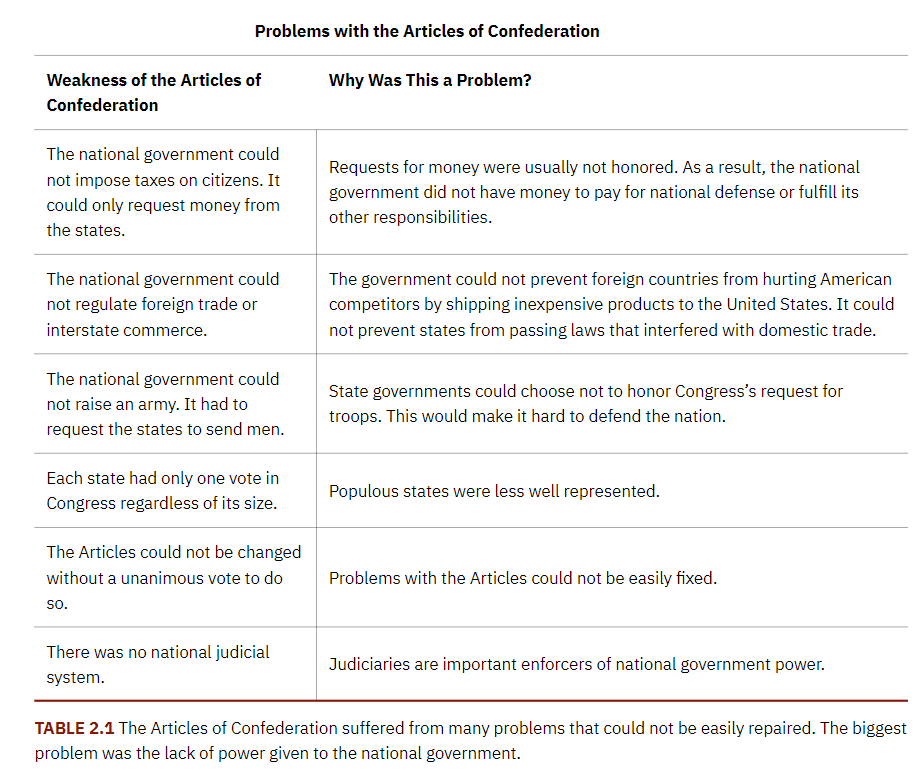
[Shays’ Rebellion]
disposal: the action or process of throwing away or getting rid of something.
onerous: (of a task, taxes, duty, or responsibility) involving an amount of effort and difficulty that is oppressively burdensome.
raid: a sudden attack on an enemy by troops, aircraft, or other armed forces in warfare.
revising: re-examine and make alterations to (written or printed matter).
alteration: the action or process of altering or being altered.
convention: a way in which something is usually done, especially within a particular area or activity.
[Constitutional Convention] May 1787
mob: a large crowd of people, especially one that is disorderly and intent on causing trouble or violence.
allot: give, apportion, or divide (something) to someone as a share or task.

institute: set in motion or establish (something, especially a program, system, or inquiry).
emancipate: set free, especially from legal, social, or political restrictions.
indenture: a legal agreement, contract, or document.
inconsistent: not staying the same throughout.
reliance: dependence on or trust in someone or something.
split: break or cause to break forcibly into parts, especially into halves or along the grain.
formidable: inspiring fear or respect through being impressively large, powerful, intense, or capable.
veto: a constitutional right to reject a decision or proposal made by a law-making body.
compel: force or oblige (someone) to do something.
comply: (of a person or group) act in accordance with a wish or command.
ingenious: (of a person) clever, original, and inventive.
allay: diminish or put at rest (fear, suspicion, or worry).
beleaguer: cause problems or difficulties for.
preamble: a preliminary or preparatory statement; an introduction.
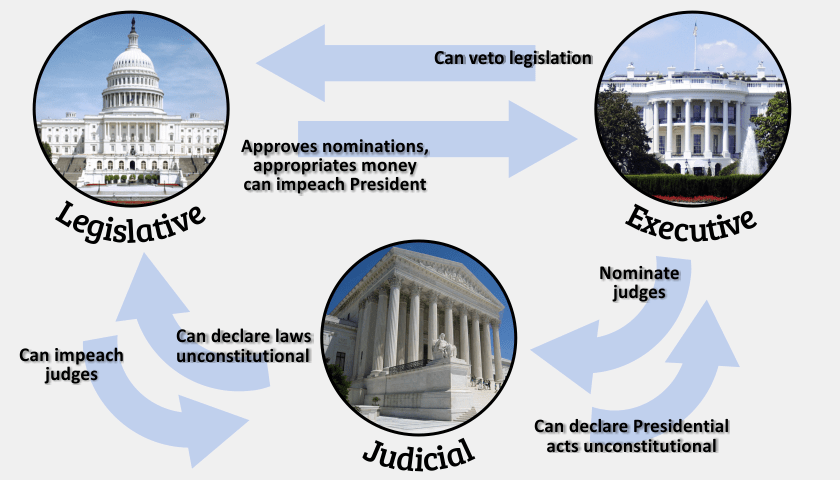
The Constitution consists of a preamble and seven articles. The first three articles divide the national
government into three branches—Congress, the executive branch, and the federal judiciary—and describe the powers and responsibilities of each.
[the Great Compromise]
patent: a government authority or license conferring a right or title for a set period, especially the sole right to exclude others from making, using, or selling an invention.
[House of Representatives]
naturalization: Naturalization is the legal act or process by which a non-citizen of a country may acquire citizenship or nationality of that country.
[senate]
adamant: refusing to be persuaded or to change one’s mind.
vehemently: in a forceful, passionate, or intense manner; with great feeling.
impasse: a situation in which no progress is possible, especially because of disagreement; a deadlock.
apportionment: the action or result of apportioning something.
mollify: appease the anger or anxiety of (someone).
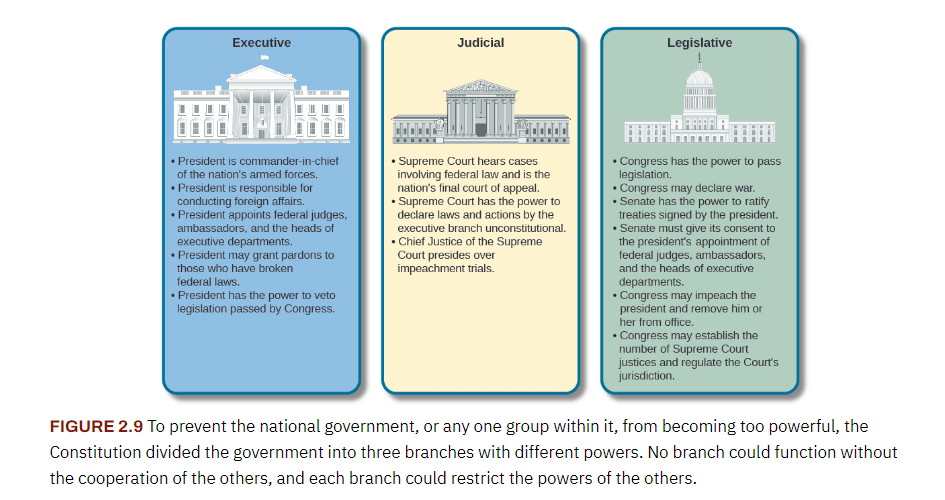
constitutionality: the quality of being in accordance with a political constitution.
impeach: charge (the holder of a public office) with misconduct.
[Chief Justice]
sparingly: in a restricted or infrequent manner; in small quantities.
In a federal system, power is divided between the federal (or national) government and the state governments. Great or explicit powers, called enumerated powers, were granted to the federal government to declare war, impose taxes, coin and regulate currency, regulate foreign and interstate commerce, raise and maintain an army and a navy, maintain a post office, make treaties with foreign nations and with Native American tribes, and make laws regulating the naturalization of immigrants.
All powers not expressly given to the national government, however, were intended to be exercised by the states. These powers are known as reserved powers (Figure 2.10). Thus, states remained free to pass laws regarding such things as intrastate commerce (commerce within the borders of a state) and marriage. Some powers, such as the right to levy taxes, were given to both the state and federal governments. Both the states and the federal government have a chief executive to enforce the laws (a governor and the president, respectively) and a system of courts.
supersede: take the place of (a person or thing previously in authority or use); supplant.
[supremacy clause]
triumph: a great victory or achievement.
vest: confer or bestow (power, authority, property, etc.) on someone.
thereof: of the thing just mentioned; of that.
heritage: property that is or may be inherited; an inheritance.
counterpoint: an argument, idea, or theme used to create a contrast with the main element.
hurdle: an obstacle or difficulty.
inherent: existing in something as a permanent, essential, or characteristic attribute.
Since the authority inherent in the Articles of Confederation and the Confederation Congress had rested on the consent of the states, changes to the nation’s government should also have been ratified by the state legislatures. Instead, by calling upon state legislatures to hold ratification conventions to approve the Constitution, the framers avoided asking the legislators to approve a document that would require them to give up a degree of their own power. The men attending the ratification conventions would be delegates elected by their neighbors to represent their interests. They were not being asked to relinquish their power; in fact, they were being asked to place limits upon the power of their state legislators, whom they may not have elected in the first place. Finally, because the new nation was to be a republic in which power was held by the people through their elected representatives, it was considered appropriate to leave the ultimate acceptance or rejection of the Constitution to the nation’s citizens. If convention delegates, who were chosen by popular vote, approved it, then the new government could rightly claim that it ruled with the consent of the people.
plaintiff: a person who brings a case against another in a court of law.
defendant: an individual, company, or institution sued or accused in a court of law.
reassurance: the action of removing someone’s doubts or fears.
habeas corpus: a writ requiring a person under arrest to be brought before a judge or into court, especially to secure the person’s release unless lawful grounds are shown for their detention.
reiterate: say something again or a number of times, typically for emphasis or clarity.
potency: the power of something to influence or make an impression.
afflicting: (of a problem or illness) cause pain or suffering to; affect or trouble.
irreparable: (of an injury or loss) impossible to rectify or repair.
aristocracy: the highest class in certain societies, especially those holding hereditary titles or offices.
detriment: the state of being harmed or damaged.
sentiment: a view of or attitude toward a situation or event; an opinion.
encompass: surround and have or hold within.
commonality: the state of sharing features or attributes.
eligibility: the state of having the right to do or obtain something through satisfaction of the appropriate conditions.
amendment: a minor change or addition designed to improve a text, piece of legislation, etc.
intercession: the action of intervening on behalf of another.
initially: at first.
compile: produce (something, especially a list, report, or book) by assembling information collected from other sources.
predominate: be the strongest or main element; be greater in number or amount.
rhetorically: (with reference to a question) with the aim of producing an effect or making a statement rather than eliciting information.
counter: speak or act in opposition to.
artisan: a worker in a skilled trade, especially one that involves making things by hand.
patron: a person who gives financial or other support to a person, organization, cause, or activity.
faction: a small organized dissenting group within a larger one, especially in politics.
transient: lasting only for a short time; impermanent.
ferment: agitation and excitement among a group of people, typically concerning major change and leading to trouble or violence.
deliberation: long and careful consideration or discussion.
dispatch: send off to a destination or for a purpose.
anticipate: regard as probable; expect or predict.
procedure: an established or official way of doing something.
originate: have a specified beginning.
outline: a line or set of lines enclosing or indicating the shape of an object in a sketch or diagram.
precedent: an earlier event or action that is regarded as an example or guide to be considered in subsequent similar circumstances.
subsequent: coming after something in time; following.
seizure: the action of capturing someone or something using force.
unwarranted: not justified or authorized.
rectify: put right; correct.
presidential inauguration: the beginning or introduction of a system, policy, or period.
implementation: the process of putting a decision or plan into effect; execution.
momentum: the quantity of motion of a moving body, measured as a product of its mass and velocity.
abolitionist: a person who favors the abolition of a practice or institution, especially capital punishment or (formerly) slavery.
suffragist: a person advocating that the right to vote be extended to more people, especially to women.\
suffrage: the right to vote in political elections.



Leave a comment