evolve: develop gradually, especially from a simple to a more complex form.
polis: a city state in ancient Greece, especially as considered in its ideal form for philosophical purposes.
arable: (of land) used or suitable for growing crops.
seaborne: transported or traveling by sea.
standstill: a situation or condition in which there is no movement or activity at all; stop.
An epic is a long, often book-length, narrative in verse form that retells the heroic journey of a single person or a group of persons. Elements that typically distinguish epics include superhuman deeds, fabulous adventures, highly stylized language, and a blending of lyrical and dramatic traditions.
backdrop: a painted cloth hung at the back of a theater stage as part of the scenery.
slink away from: to walk away from somewhere quietly so that you are not noticed.
The Acropolis is a large elevated plateau within the city of Athens on which many important buildings are located. It is especially famous for its ancient temples, some of which are still in use today. The term “Acropolis” comes from the Greek words akros meaning “highest” and polis meaning “city.”
cavalry (from the French word cavalerie, itself derived from “cheval” meaning “horse”) are soldiers or warriors who fight mounted on horseback.
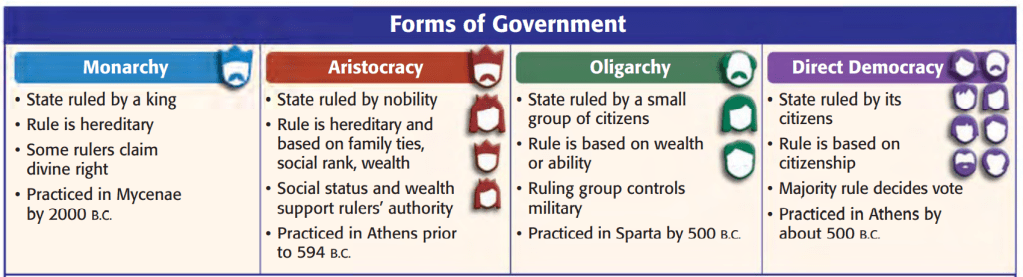
aristocracy: the highest class in certain societies, especially those holding hereditary titles or offices.
tyrant: an absolute ruler who is unrestrained by law, or one who has usurped a legitimate ruler’s sovereignty.
debtor: a person or institution that owes a sum of money.
wrongdoer: a person who behaves illegally or dishonestly; an offender.
propose: nominate (someone) for an elected office or as a member of a society.
assembly: a group of people gathered together in one place for a common purpose.
knead: to work and press into a mass with or as if with the hands kneading dough.
A coverlet is a thin, pre-filled bedding that is meant to just cover the surface of the bed and the sides of the box spring.
vigorous: strong, healthy, and full of energy.
complexion: the natural color, texture, and appearance of a person’s skin, especially of the face.
child-rearing: the process of bringing up a child or children.
helot: a member of a class of serfs (semifree peasants) in ancient Sparta.
rigorously: in an extremely thorough and careful way.
lavish: gorgeous, costly.
hurl: to throw or fling with great force or vigo.
inhabitant: a person or animal that lives in or occupies a place.
discipline: the practice of training people to obey rules or a code of behavior, using punishment to correct disobedience.
barrack: a building or set of buildings used especially for lodging soldiers in garrison.
tunic: a loose garment, typically sleeveless and reaching to the wearer’s knees, as worn in ancient Greece and Rome.
Infantry is a military specialization which engages in ground combat on foot.
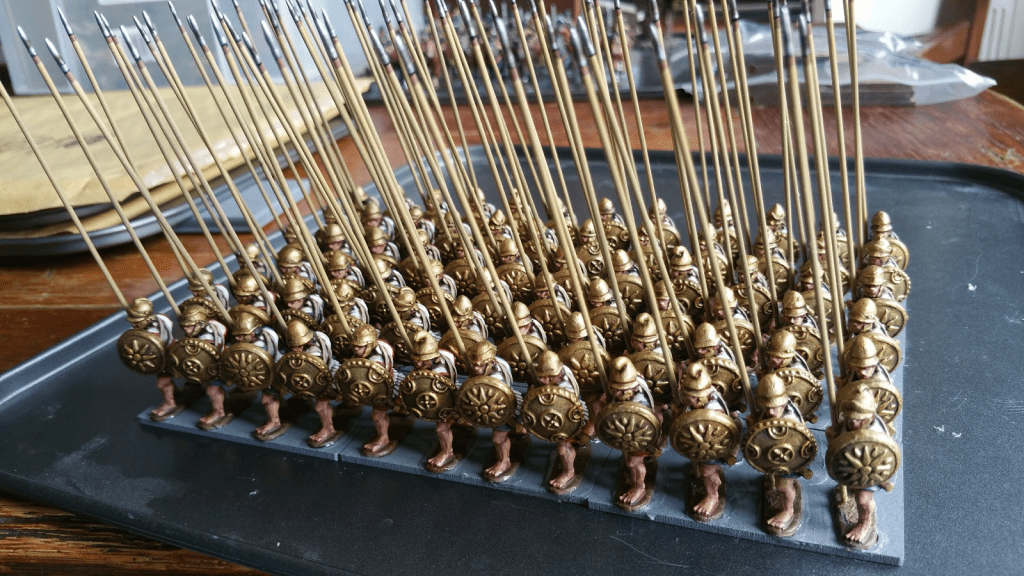
Phalanx: a body of heavily armed infantry in ancient Greece formed in close deep ranks and filesa body of troops in close array
casualty: a person killed or injured in a war or accident.
battering rams: a heavy beam, originally with an end in the form of a carved ram’s head, formerly used in breaching fortifications.
puncture: make a hole in
on the defensive/ on the offensive
basked in the glory
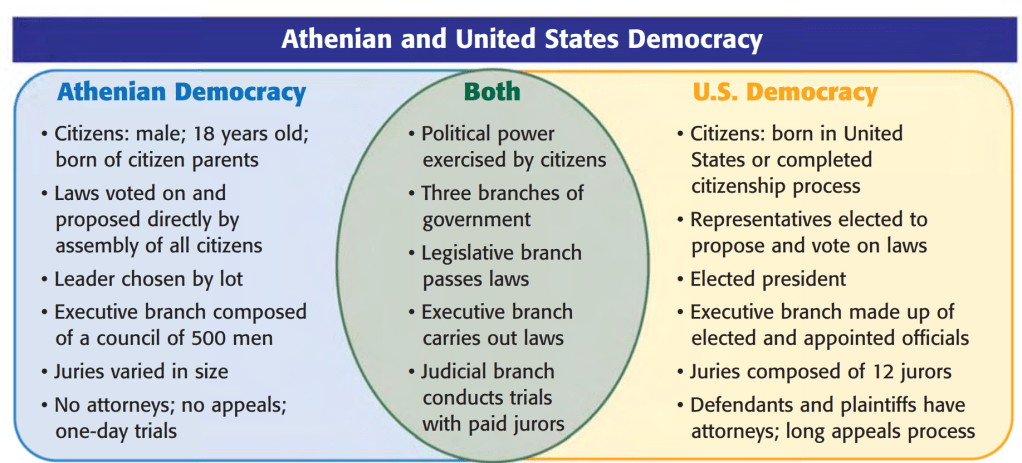
Defendants (who were acused) and plaintiffs (who bring cases) have attorneys (lawyers).
obscurity: the state of being unknown, inconspicuous, or unimportant.
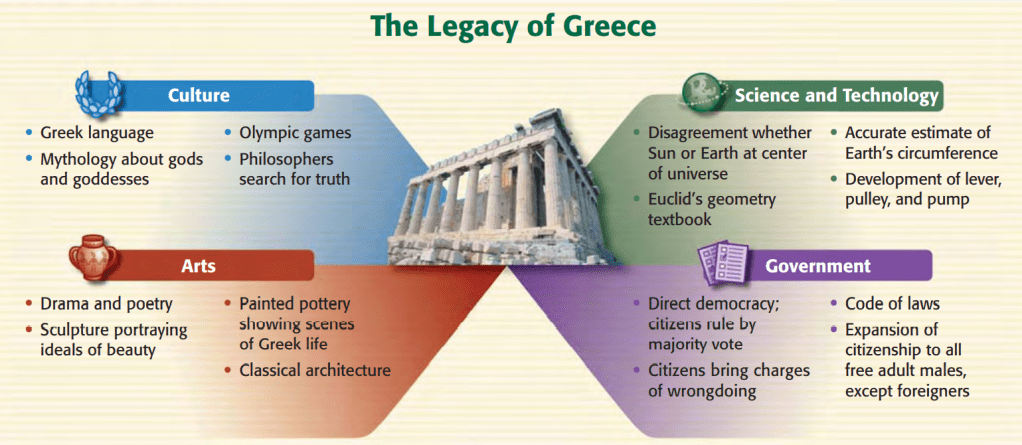
Pericles entrusted much of the work on the Parthenon to the sculptor Phidias (FIDH•ee•uhs). Within the temple, Phidias crafted a giant statue of Athena that not only contained such precious materials as gold and ivory, but also stood over 30 feet tall.
Phidias and other sculptors during this golden age aimed to create figures that were graceful, strong, and perfectly formed. Their faces showed neither joy nor anger, only serenity. Greek sculptors also tried to capture the grace of the idealized human body in motion. They wanted to portray ideal beauty, not realism. Their values of harmony, order, balance, and proportion became the standard of what is called classical art.
hubris: excessive pride or self-confidence.
slapstick: comedy based on deliberately clumsy actions and humorously embarrassing events.
inevitable: certain to happen; unavoidable.
truce: an agreement between enemies or opponents to stop fighting or arguing for a certain time.
fleet: a group of ships sailing together, engaged in the same activity, or under the same ownership.
One group of philosophers, the Sophists, questioned people’s unexamined beliefs and ideas about justice and other traditional values. One of the most famous Sophists was Protagoras, who questioned the existence of the traditional Greek gods. He also argued that there was no universal standard of truth, saying “Man [the individual] is the measure of all things.” These were radical and dangerous ideas to many Athenians.
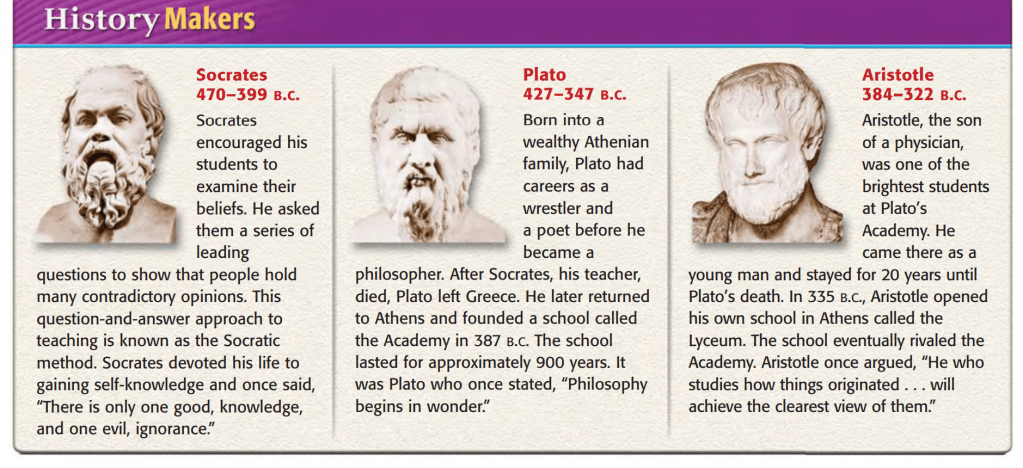
lyceum: a hall for public lectures or discussions.
deity: a god or goddess (in a polytheistic religion).
drapery: cloth, curtains, or clothing hanging in loose folds.
triumph: a great victory or achievement.
dedicate: devote (time, effort, or oneself) to a particular task or purpose.
shrewd: having or showing sharp powers of judgment; astute.
phalanx: a rectangular mass military formation, usually composed entirely of heavy infantry armed with spears, pikes, sarissas, or similar pole weapons.
orator: a public speaker, especially one who is eloquent or skilled.
stabbed: (of a person) thrust a knife or other pointed weapon into (someone) so as to wound or kill.
demonstrate: clearly show the existence or truth of (something) by giving proof or evidence.
callous: showing or having an insensitive and cruel disregard for others.
yield: give way to arguments, demands, or pressure.
scorching(very hot) dessert
drenching (wet thoroughly; soak.) monsoon rains
After Alexander died, his Macedonian generals fought among themselves for control of his empire. Eventually, three ambitious leaders won out. Antigonus (an•TIG•uh•nuhs) became king of Macedonia and took control of the Greek city-states. Ptolemy (TAHL•uh•mee) seized Egypt, took the title of pharaoh, and established a dynasty. Seleucus (sih•LOO•kuhs) took most of the old Persian Empire, which became known as the Seleucid kingdom.
As a result of Alexander’s policies, a vibrant new culture emerged. Greek (also known as Hellenic) culture blended with Egyptian, Persian, and Indian influences. This blending became known as Hellenistic culture.
spacious: (especially of a room or building) having ample space.
elaborate: involving many carefully arranged parts or details; detailed and complicated in design and planning.
Papyrus is a material similar to thick paper that was used in ancient times as a writing surface.
pulley: a piece of equipment for moving heavy objects up or down, consisting of a small wheel over which a rope or chain attached to the object can be easily raised or lowered.
preach: publicly proclaim or teach (a religious message or belief).

commemorate: recall and show respect for (someone or something).
topple: overbalance or become unsteady and fall slowly.
scrap: a small piece or amount of something, especially one that is left over after the greater part has been used.
Cleopatra: was Queen of the Ptolemaic Kingdom of Egypt from 51 to 30 BC, and its last active ruler.
ruthless: having no pity : merciless, cruel.
devious: showing a skillful use of underhanded tactics (an action or strategy) to achieve goals.
integrity: the quality of being honest and having strong moral principles; moral uprightness.
salubrious: health-giving; healthy.
From about 1000 to 500 B.C., three groups inhabited the region and eventually battled for control. They were the Latins, the Greeks, and the Etruscans. The Latins built the original settlement at Rome, a cluster of wooden huts atop one of its seven hills, Palatine Hill. These settlers were considered to be the first Romans.
Between 750 and 600 B.C., the Greeks established colonies along southern Italy and Sicily. The cities became prosperous and commercially active. They brought all of Italy, including Rome, into closer contact with Greek civilization.
The Etruscans were native to northern Italy. They were skilled metalworkers and engineers. The Etruscans strongly influenced the development of Roman civilization. They boasted a system of writing, for example, and the Romans adopted their alphabet. They also influenced Rome’s architecture, especially the use of the arch.
In the early republic, different groups of Romans struggled for power. One group was the patricians, the wealthy landowners who held most of the power. The other important group was the plebeians, the common farmers, artisans, and merchants who made up the majority of the population.
patrician: an aristocrat or nobleman.
plebeian: of or belonging to the commoners of ancient Rome.
tribune: an official in ancient Rome chosen by the plebeians to protect their interests.
The Twelve Tables established the idea that all free citizens had a right to the protection of the law.
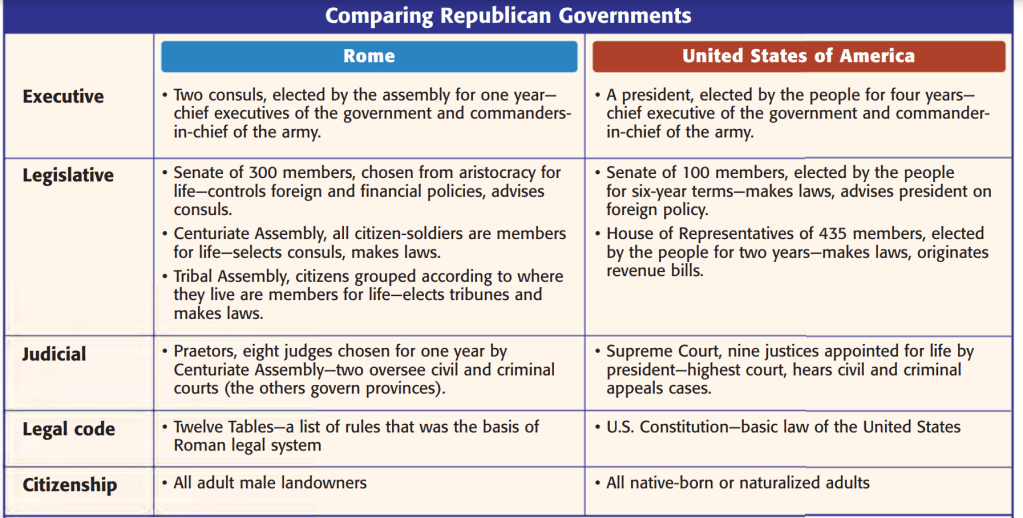
Roman soldiers were organized into large military units called legions. The Roman legion was made up of some 5,000 heavily armed foot soldiers (infantry). A group of soldiers on horseback (cavalry) supported each legion. Legions were divided into smaller groups of 80 men, each of which was called a century.
lenient: (of punishment or a person in authority) permissive, merciful, or tolerant.
intent: intention or purpose.
devise: plan or invent (a complex procedure, system, or mechanism) by careful thought.
siege: a military operation in which enemy forces surround a town or building, cutting off essential supplies, with the aim of compelling the surrender of those inside.
plight: a dangerous, difficult, or otherwise unfortunate situation.
eloquently: plight: a dangerous, difficult, or otherwise unfortunate situation.
recruit: enlist someone (or call up ) in the armed forces.
allegiant: loyal or faithful, especially to a person or cause.
triumvirate: (in ancient Rome) a group of three men holding power, in particular ( the First Triumvirate ) the unofficial coalition of Julius Caesar, Pompey, and Crassus in 60 BC and ( the Second Triumvirate ) a coalition formed by Antony, Lepidus, and Octavian in 43 BC.
plot: a plan made in secret by a group of people to do something illegal or harmful.
exalted: (of a person or their rank or status) at a high or powerful level.
derive: obtain something from (a specified source).
pomp: ceremony and splendid display.
amid: surrounded by; in the middle of.
coinage: standard coin.
denarius: the standard Roman silver coin.
gladiator: professional fighterIn Rome, government and religion were linked. The deities were symbols of the state. Romans were expected to honor them not only in private rituals at shrines in their homes but also in public worship ceremonies conducted by priests in temples.Among the most important Roman gods and goddesses were Jupiter, father of the gods; Juno, his wife, who watched over women; and Minerva, goddess of wisdom and of the arts and crafts. During the empire, worship of the emperor also became part of the official religion of Rome.
extravagantly: with a lack of restraint in spending money or using resources.
sprawling: spreading out in different directions.
A tenement is a type of building shared by multiple dwellings, typically with flats or apartments on each floor and with shared entrance stairway access.
rickety: (of a structure or piece of equipment) poorly made and likely to collapse.
Pompeii and Herculaneums
A villa is a type of house that was originally an ancient Roman upper class country house.
carpentry: the activity or occupation of making or repairing things in wood.
blasphemy: the act or offense of speaking sacrilegiously about God or sacred things; profane talk.
contempt: disregard.
have a vision: to imagine that a particular thing is going to happen in the future.
Centuries of Jewish exile followed the destruction of their temple and the fall of Jerusalem in A.D. 70. This period is called the Diaspora, from the Greek word for “dispersal.” Jews fled to many parts of the world,including Europe.In the 1100s, many European Jews were expelled from their homes.Some moved to Turkey, Palestine,and Syria. Others went to Poland and neighboring areas.The statelessness of the Jews did not end until the creation of Israel in 1948.
Martyrs were people willing to sacrifice their lives for the sake of a belief or a cause.
intensified: grow stronger.
persecution: to harass or punish in a manner designed to injure, grieve, or afflict.
The widespread appeal of Christianity was due to a variety of reasons.Christianity grew because it • embraced all people—men and women, enslaved persons, the poor, and nobles;• gave hope to the powerless;• appealed to those who were repelled by the extravagances of imperial Rome;• offered a personal relationship with a loving God;• promised eternal life after death.
Divine
Heresy
Intense
Sacraments
Plundered
Predestined
doomed
Diaspora
Drastic
Pax Romana
Mint coins
Meager
Disarray
Allegiance
Mercenaries
Diocletian
Prestige
Elaborate
Aura
Plunder
Imperial
Coexisted
Hordes
Attila
Plundered
Stupendous
Yielded
Hellenistic
classical civilization
bas-relief
frescoes
Stoicism
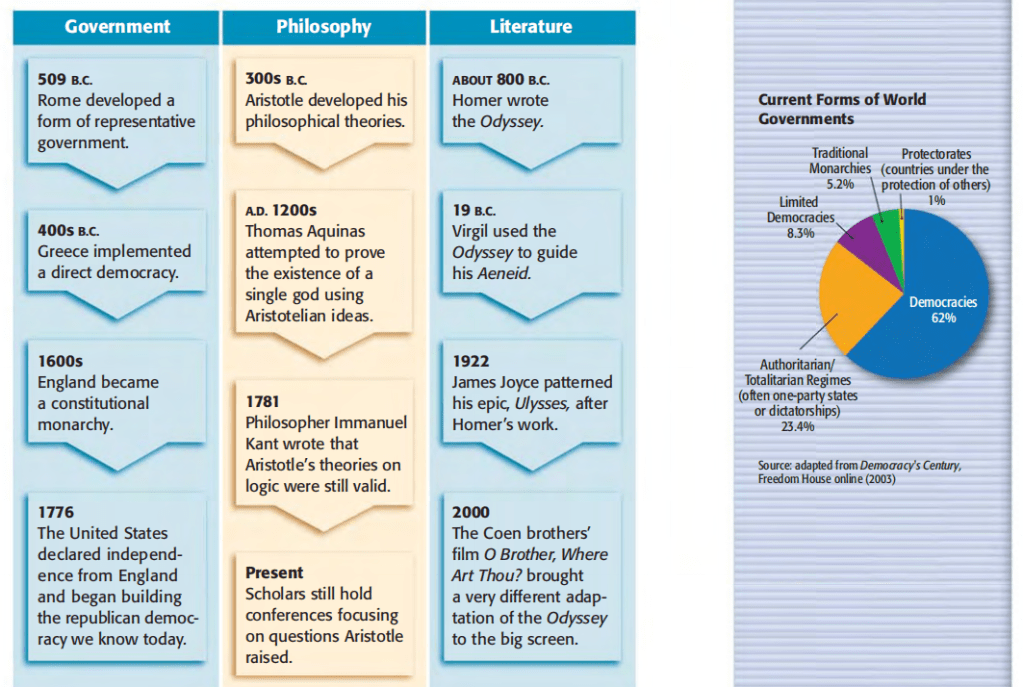
The poet Virgil spent ten years writing the most famous work of Latin literature, the Aeneid (ih•NEE•ihd), the epic of the legendary Aeneas. Virgil modeled the Aeneid, written in praise of Rome and Roman virtues, after the Greek epics of Homer.
Depiction
prose
cessation
prodigality
Colosseum.
aqueducts.
ravine
gladiator
ramps
velarium—a retractable canvas awning that shielded spectators from sun and rain.
capitol
zeal
benevolence
Mauryan Empire.
Levy taxes
caste
assess taxesimposing
bustling
exempt
tumults
perish.
inscribed
preach
cluster
revered
upheaval
interpretational
bodhisattvas
salvation
doctrines
stupas
The three most important Hindu gods were Brahma (BRAH•muh), creator of the world; Vishnu (VIHSH•noo), preserver of the world;and Shiva (SHEE•vuh), destroyer of the world. Of the three, Vishnu and Shiva were by far the favorites. Many Indians began to devote themselves to these two gods. As Hinduism evolved into a more personal religion, its popular appeal grew.
Kalidasa’s most famous play is Shakuntala.
plantain
languid
Around A.D. 500, an Indian named Aryabhata (AHR•yuh•BUHT•uh) calculated the value of pi (π) to four decimal places. He also calculated the length of the solar year as 365.3586805 days. This is very close to modern calculations made with an atomic clock. They described more than 1,000 diseases and more than 500 medicinal plants. Hindu physicians performed surgery—including plastic surgery—and possibly gave injections.
hoard
monastery
Rumblings of discontent
aristocratic
commanderies
palace plots
archery
grudge
envoy
pastures
exerted
Confucius had taught that gentlemen should practice “reverence [respect], generosity, truthfulness, diligence [industriousness], and kindness.”
collar harness
wheelbarrow: a small cart with a single wheel at the front and two supporting legs and two handles at the rear, used typically for carrying loads in building work or gardening.
decree
brewing of alcohol
wield power
regent
intrigues
toppled
disintegrated
pastoralist
communal
Sahel
mahogany
teak
tsetse fly
millet,
yam
griot
tributary
desperate
persecution
depletion
influx
sparsely
aqueducts
plundered
stele
cisterns
intermingling
forge
quarry
dedicated
depletion
span
Beringia.
buckle
chiseled
charred
mesoamerica
remnant
tar
colossal
jaguar
zapotec
Monte Alban
ficulty
glyph
grandeur
shamans
captive
intricate
precinct
menacing
merit


Leave a comment