grab the brass ring: a very desirable prize, goal, or opportunity.
flummoxed: completely unable to understand.
strained: showing signs of nervous tension or tiredness.
all too human: having or characterized by the fundamental flaws, failings, and feelings of human beings.
chaplain: originally a priest or minister who had charge of a chapel, now an ordained member of the clergy who is assigned to a special ministry.
shave off: reduce an amount.
time off: a period of time when you do not work because of illness or holidays, or because your employer has given you permission to do something else.
revel in: to enjoy (something) very much.
be fixated on: thinking hard about something all the time.
travail: engage in painful or laborious effort.
registers no emotion: shows no emotion.
A glowing description or opinion about someone or something praises them highly or supports them strongly.
forge: create (something) strong, enduring, or successful.
flawed: having or characterized by a fundamental weakness or imperfection.
exuberant: full of energy, excitement, and cheerfulness.
elated: ecstatically happy.
incinerator: a furnace for burning waste.
cramped: not having enough space or time. a cramped table
venture: dare to do or say something that may be considered audacious (often used as a polite expression of hesitation or apology).
ebullient: cheerful and full of energy.
Cheerleading is an activity in which the participants (called cheerleaders) cheer for their team as a form of encouragement.
coax: gently and persistently persuade (someone) to do something.
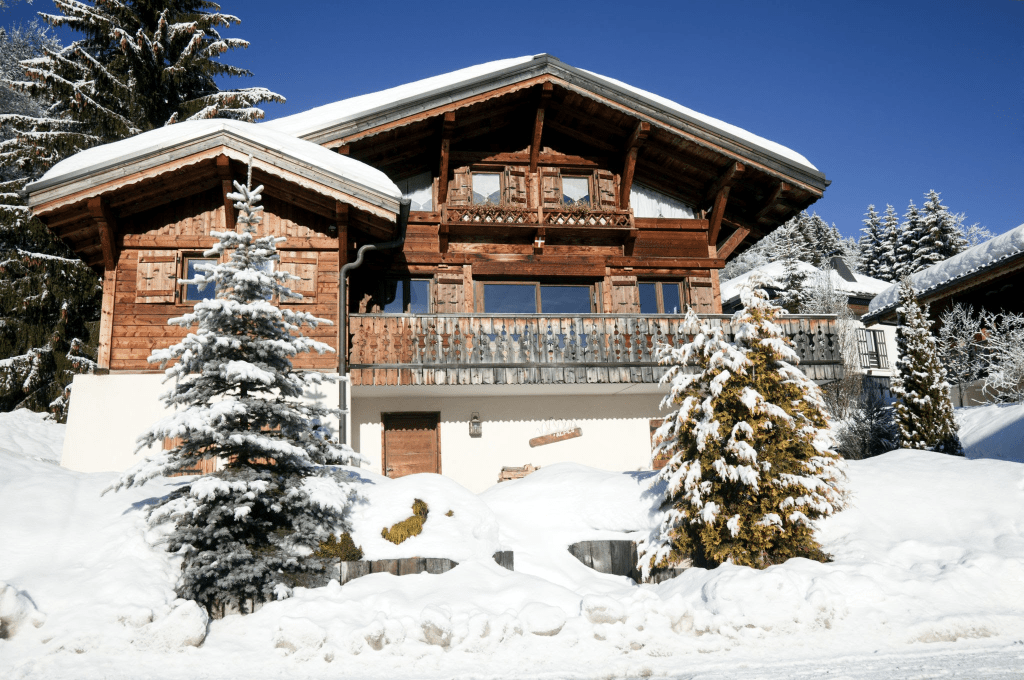
chalet:
study carrels:

a dog-eared book:

drop a class: unenrolling in a course due to low grades or disinterest.
huddle: crowd together; nestle closely.
byzantine process: criticizing it because it seems complicated or secretive.
trivia game: one where the competitors are asked questions about interesting but unimportant facts in many subjects.
grind: a difficult or boring activity that needs a lot of effort.
The morning on which the students work with the immigrants at the community organization is their brief shining moment. After that one day, they return to the grind of school.
Many private schools seal their doors to the public.
Sometimes, their parents don’t speak English. Often, their parents work, some at multiple jobs, and cannot take off in the middle of the day for parent-teacher conferences.
take off: to absent oneself, as from work.
in the middle of: be busy with.
Asbestosis (as-bes-TOE-sis) is a chronic lung disease caused by inhaling asbestos fibers.
strapped for: lacking of.
Pro bono publico, usually shortened to pro bono, is a Latin phrase for professional work undertaken voluntarily and without payment. In the United States, the term typically refers to provision of legal services by legal professionals for people who are unable to afford them.
A mill town, also known as factory town or mill village, is typically a settlement that developed around one or more mills or factories, usually cotton mills or factories producing textiles.
board the bus (plane, train etc): to get on a bus, (plane, train etc) in order to travel somewhere.
latch onto: to grab and hold (something).
tenacious: tending to keep a firm hold of something; clinging or adhering closely.
feasible: possible to do easily or conveniently.
dismantling: take (a machine or structure) to pieces.
Shibboleth is a Hebrew word that means “ear of corn” or “flood.” In a Biblical story, the word was used as a password — a means to figure out who was part of your group and who wasn’t. For example, Britons used the word lorry, for the American term truck. American soldiers used such words as a shibboleth to distinguish Nazi spies.
Dismantling the athletic-and-academic industrial complex that has been built around affluent children might take a while. It’s been reinforced by decades of shibboleths and false beliefs. Parents whose kids are barely out of toddlerhood brag about how good their kids are at soccer and speak about them getting college scholarships from their sport (which is very unlikely). When most kids are getting involved in travel teams at a young age, it’s hard to be the lone parent who wants to reclaim family night and playtime. It’s hard not to get involved in the excitement of wanting our kids to excel, and kids who don’t play on travel teams don’t have many options if they want to improve. After all, if all the other kids are playing so competitively, how will kids make the school team if they don’t have a lot of practice?
Priming is a phenomenon whereby exposure to one stimulus influences a response to a subsequent stimulus, without conscious guidance or intention.
frenzied: wildly excited or uncontrolled.
tout: to advertise, talk about, or praise something or someone repeatedly, especially as a way of encouraging people to like, accept, or buy something.
bestow: put (something) in a specified place.
These are kids who tear out of school the minute it ends and head to the pool or who are often absent from school so they can participate in sailing regattas.
regatta: a sporting event consisting of a series of boat or yacht races.
shoot the bull: to talk informally about unimportant things.
Their worry tells on their faces. Day in and day out they are in the pool or on the water or on the slopes. There is no doubt they love their sport, but the time involved in perfecting themselves begins to wear them down. There is a time, usually in ninth or tenth grade, when it all becomes too much. They can’t handle chemistry and finals and their tournaments at the same time. But their parents keep driving them to early-morning practices and weekend tournaments, and the kids keep doing their homework on planes.
merits: the quality of being particularly good or worthy, especially so as to deserve praise or reward.
lacrosse: Lacrosse is a team sport played with a lacrosse stick and a lacrosse ball. It is the oldest organized sport in North America, with its origins with the indigenous people of North America as early as the 12th century.
drop out: abandon a course of study.
stigmatized: to treat someone or something unfairly by disapproving of him, her, or it.
take time off: stop doing.
take a back seat to: to have less influence or importance.
Part of the problem is that, despite having attended a prestigious private high school, he doesn’t know how to write an analytical paper. His ideas swirl together in an airy cascade that dissolves into nothing. He talks about ideas, around ideas, and yet nothing winds up on the paper. No one has ever shown him how to get his ideas down, revise them, and organize them—the quotidian parts of writing.
We spend weeks going through each stage of writing a research paper for the class he is taking at NYU. He still needs help crafting each paragraph, and I ask him how he made it through so many years of school without learning to write. “There were always tutors,” he says. “And my school allowed me to hand in papers late. It was kind of like ‘three strikes and you’re still not out’.” He feels as though this policy did not help him. “They should have been harder on me,” he says in retrospect. I put together the pieces and realize that he must have had tutors write his papers for years—or at least heavily edit them—without teaching him how to write on his own. He returns to college and has tutoring (not from me) to get through his coursework. His therapist, with his parents’ permission, tells me that he continues to struggle with depression and with wanting a romantic relationship that he can’t seem to manage.In addition, I’ve tutored students who have had major depressive and bipolar episodes in college. Some researchers, such as Demitri and Janice Papolos, believe that stress can sensitize the brain to depression or mania. These stressors are called kindling, and like smaller twigs that help logs catch fire, they ignite the brain to be sensitive to mood disruptions that then ignite on their own. Alcohol and some drugs can also be sources of kindling, and a person who has had these types of kindling experiences can then begin to experience them on their own, without the kindling. However, these brain fires can also be doused through treatment, and the teenage and early-adult years represent a time when people can either be set on the path to better mental health or continue to heap their piles of kindling.
quotidian: of or occurring every day; daily.
retrospect: a survey or review of a past course of events or period of time.
Bipolar disorder can cause your mood to swing from an extreme high to an extreme low. Manic symptoms can include increased energy, excitement, impulsive behaviour, and agitation.
Mania is a condition in which you have a period of abnormally elevated, extreme changes in your mood or emotions, energy level or activity level.
The kindling hypothesis (Post, 1992) posits that initial episodes of a mood disorder are more likely to be influenced by psychosocial stressors compared to later episodes, upon which stressors are thought to have less of an effect.
douse: pour a liquid over; drench.
juncture: a particular point in events or time.
stead: the place or role that someone or something should have or fill (used in referring to a substitute).
benign: gentle and kindly.
coerce: persuade (an unwilling person) to do something by using force or threats.
tackle: to try to take the ball from a player in the other team,
decency: things required for a reasonable standard of life.
integrity: the quality of being honest and having strong moral principles.
burgeon: begin to grow or increase rapidly; flourish.
varsity: used to describe sports teams at schools or colleges that are at the most skilled level of play.
gone out the window: to stop being used or thought about. By that point in the argument, reason had gone out the window.
frenzy: a temporary madness.
dilusion: a false belief.
The American dream as it now stands—the one Gatsby himself wanted so badly as he stared at the green light on Daisy Buchanan’s pier—has gaping holes in it. Money can make life glittering, magical, fresh, until it creates loneliness and lovelessness in the young.
contentment: a state of happiness and satisfaction.
predicate: to proclaim; declare; affirm; assert.
A chapel is a Christian place of prayer and worship that is usually relatively small. The term has several meanings.
diminutive: extremely or unusually small.
encrusted: covered or decorated with a hard surface layer.
nudge: touch or push (something) gently or gradually.
asterisk: a symbol (*) used to mark printed or written text, typically as a reference to an annotation or to stand for omitted matter.
lumberjack: an entertainer in shows which feature ax-throwing, pole climbing, & etc.
cater the event: the process of preparing and providing food for different types of events.
pitch into: to start to do something as part of a group, especially something helpful.
muffled: (of a sound) not loud because of being obstructed in some way; muted.
white-knuckling: the process of getting sober using nothing more than the willpower to avoid drinking.
prepare me for: to do or acquire what is necessary to be ready for something.
lapse: a temporary failure of concentration, memory, or judgment.
supervise: keep watch over (someone) in the interest of their or others’ security.
fraternity: a group of people sharing a common profession or interests.
rehab: the process of helping someone to lead a normal life again after they have been ill, or when they have had a drug or alcohol problem.
lavish: they give, spend, or use a lot of something.
impulsivity: Impulsivity can have causes that aren’t due to underlying disease. Examples include normal individual variation or substance abuse.
contrite: feeling or showing sorrow and remorse for a wrong that one has done.
sanctuary: a holy or sacred place.
go west: lost, damaged, or spoiled in some way
huddle: crowd together; nestle closely.
impetuousness: acting or done quickly with little or inadequate thought.
steward: a person responsible for supplies of food to a college, club, or other institution.
vacillate: to waver in mind, will, or feeling.
torment: experiencing or characterized by severe physical or mental suffering.
lighthearted: (of a person or their behavior) cheerful and carefree.
mantle: an important role or responsibility that passes from one person to another.
buoyant: cheerful and optimistic.
slipped into one’s shoes: to take on a particular role or task that someone else has been doing.
gobsmacked: overwhelmed with wonder, surprise, or shock.
For the first year, I literally had no idea of what people were speaking about, as I wasn’t familiar with most prep schools (where many of the students came from) and thought squash was a tasteless vegetable rather than a sport.
insouciance: casual lack of concern; indifference.
pro forma: as a matter of form or politeness.
smite down: be strongly attracted to someone or something.
A paraphrase is a restatement of the meaning of a text or passage using other words.
ambience: the character and atmosphere of a place.
carrell: a table that is often partitioned or enclosed and is used for individual study especially in a library.
marvel: be filled with wonder or astonishment.
Strangely, miraculously, I did very well. Not because I was necessarily so smart but because I was hungry. I spent hours upon hours trying to sort out the colonial histories of different African nations for a history class. I went to my teaching assistant’s office hours, though I was frightened of her, after I had received a C on my first writing assignment. Everything was exciting. I loved the glow of the streetlights on Harvard Yard where the first-year students lived and believed it had a kind of Baker-Street ambience. I found my own carrel deep in the bowels of the library, where I read Ulysses, or at least some of it, and marveled at every word in Mrs. Dalloway. I spent an entire weekend reading Ford Madox Ford with a friend of mine, only stopping to eat. I’d never had a friend who savored forty-eight hours of reading as much as I did. I met students who had met Gorbachev, meaning I was one degree of separation away from the architect of perestroika.
savor: taste (good food or drink) and enjoy it completely.
redux: bringing back.
procrastinate: procrastination involves delaying unnecessarily, whereas laziness involves being voluntarily unwilling to exert necessary effort.
flunk: fail to reach the required standard in (an examination, test, or course of study).
Often, they don’t show up to class, and occasionally, they flunk finals. They don’t fail because they are not prepared. It’s because they are overly prepared. They’ve overtrained, which any marathon runner will tell you is a colossal mistake. Runners have to pace themselves, and so do kids.
show up: to arrive somewhere in order to join a group of people, especially late or unexpectedly.
pace oneself: to do something at a speed that is steady and that allows one to continue without becoming too tired.
reminisce: cast one’s mind back to; indulge in enjoyable recollection of past events.
chic: elegantly and stylishly fashionable.
gentrify: (of a formerly poor urban area) changed in character by wealthier people moving in, improving housing, and attracting new businesses, typically displacing current inhabitants in the process.
cipher: a secret or disguised way of writing; a code.
prodigious: remarkably or impressively great in extent, size, or degree.
cram into: to force something into a small space, or to fill an area with people.
spectacles: another term for glasses.
black-clad: wearing black clothes.
a craving for: a powerful desire for something.
plump: chubby.
anemically: pale and sickly looking; lacking vitality.
curator: build up collections, often in specialist areas.
tabloid: a newspaper having pages half the size of those of a standard newspaper, typically popular in style and dominated by headlines, photographs, and sensational stories.
fall off the social radar: To be ignored or forgotten in favor of something more important; to fall into obscurity or disappear from public view.
fascinator: a woman’s light, decorative headpiece consisting of feathers, flowers, beads, etc. attached to a comb or hair clip.
warp: abnormal or strange; distorted.
perception: the ability to see, hear, or become aware of something through the senses.
out of whack: out of order; not working.



Leave a comment